
Last updated: 12 May 2026
What Is a Low-Formaldehyde Bed? What to Know Before Buying a Bed Frame, Headboard, or Mattress
A low-formaldehyde bed is made with materials selected to reduce formaldehyde emissions, especially in components such as engineered wood, adhesives, finishes, upholstered headboards, and mattress layers. The most trustworthy claims are supported by material specifications, third-party certifications, supplier declarations, or lab test reports.
What Is Formaldehyde, and Where Can It Appear in Beds?
Formaldehyde is a colourless chemical that can be released from certain furniture materials, especially engineered wood, adhesives, resins, coatings, and some fabric treatments. In beds, it may be found in components such as MDF or plywood frames, storage bases, drawers, headboards, support panels, glues, finishes, foam bonding layers, or upholstery backing. Not all beds release high levels of formaldehyde; emissions depend on material quality, manufacturing controls, and testing. Choosing beds made with low-formaldehyde materials can help customers make a more informed choice for their bedroom environment.
Difference Between Bed Frame, Mattress, and Headboard Emissions
Different parts of a bed can release different types of emissions depending on the materials used. Bed frames may contain engineered wood, adhesives, laminates, or finishes. Mattresses may involve foam, fabric covers, textile treatments, or bonding layers. Headboards, especially upholstered ones, can include a mix of wood panels, foam padding, fabric backing, and glue. This is why it is important to look at the full bed system, not just one component, when choosing lower-emission bedroom furniture.
Low Formaldehyde vs Low VOC: What’s the Difference?
Low formaldehyde refers specifically to reduced formaldehyde emissions, often from engineered wood, resins, adhesives, or finishes. Low VOC is broader and refers to lower levels of volatile organic compounds, which are gases that can be released from materials such as foam, coatings, glue, paint, and fabrics. A bed can be low in formaldehyde but still contain other VOC-emitting materials, so buyers should check what part of the product has been tested or specified.
Questions Buyers Should Ask Before Buying a Low-Emission Bed
Before buying a bed, customers should ask what materials are used in the frame, headboard, mattress, and storage base. It is also useful to ask whether the bed uses engineered wood, what formaldehyde emission grade the boards meet, whether the foam or fabric has any certifications, and whether the brand can provide material details or test reports. Clear answers help buyers understand whether “low-emission” claims apply to the whole bed or only selected components.
How Our Brand Reduces Formaldehyde Emissions
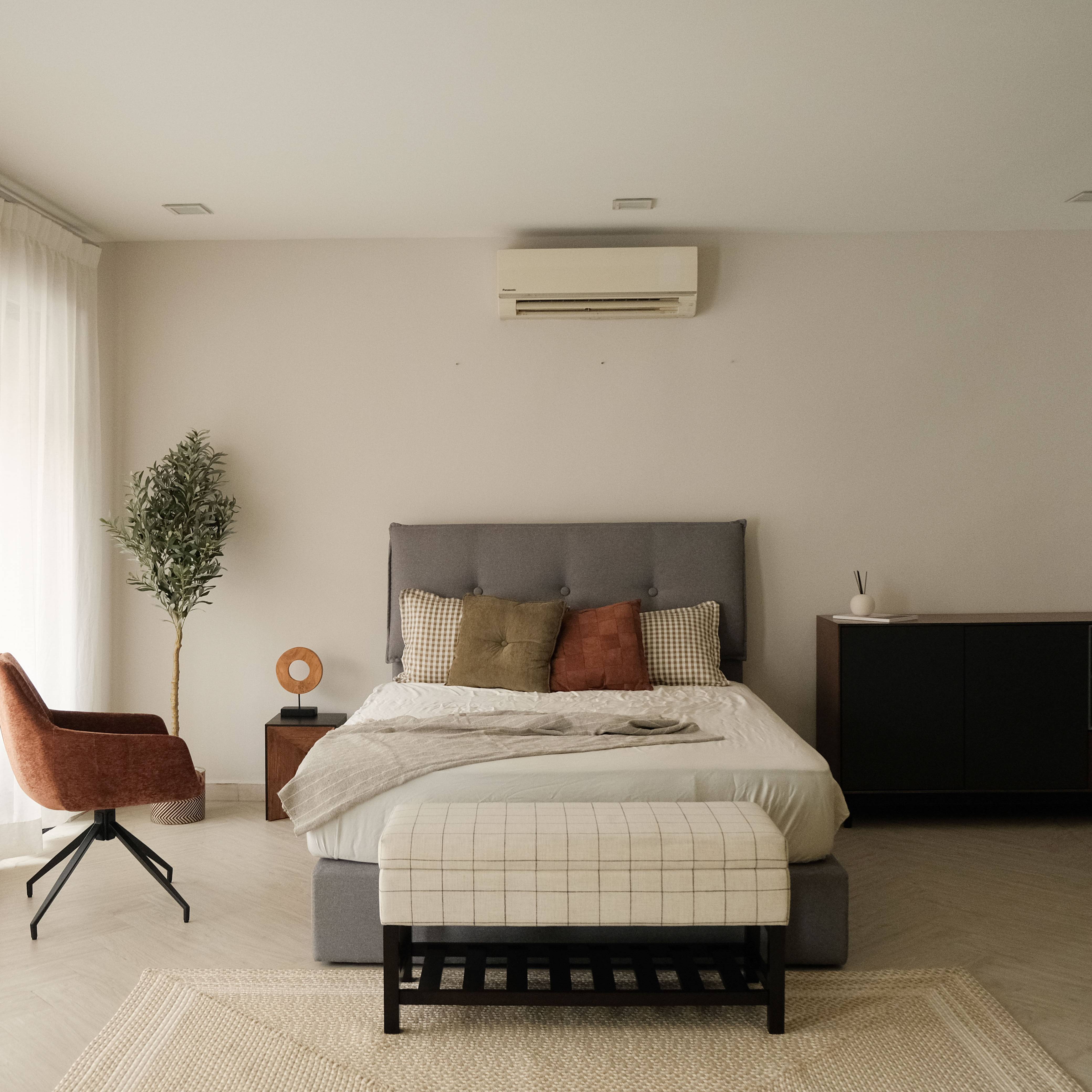
To reduce formaldehyde emissions, our beds are made using E1-rated P2 boards for selected bed components. E1 boards are designed to meet a lower formaldehyde emission level compared with E2-grade boards, which are still commonly found in some furniture markets. By choosing E1-rated boards instead of standard E2 boards, we aim to offer customers a better material choice for the bedroom, especially for enclosed spaces such as condos, children’s rooms, and newly renovated homes
Beds Made with Low-Formaldehyde Boards
|
Product |
Product Type |
Best For |
View |
|
Jonah Natural Queen Bed |
Queen bed frame with a contemporary, streamlined design. |
Customers who want a clean, modern bed frame with a natural look for a master bedroom or guest room. |
|
|
Lindsay Queen Bed |
Upholstered queen bed with a tall headboard and sturdy base. |
Customers who prefer a softer, more elegant bedroom look with a statement upholstered headboard. |
|
|
Charlotte Chiffon Beige King Bed |
King bed with a curved headboard and sleek contemporary design. |
Master bedrooms, soft neutral interiors, and customers looking for a warmer beige-toned bed design. |
|
|
Ellington Light Grey Queen Floating Bed |
Queen floating bed with motion-activated LED lights and a built-in smart light sensor. |
Modern condos, compact bedrooms, and customers who want a contemporary floating-bed look with practical night lighting. |
|
|
Riko Slate Grey King Bed |
King bed with a soft headboard and slate grey finish. |
Larger bedrooms, modern grey interiors, and customers who want a comfortable bed for lounging or reading |
Low-Formaldehyde Bedside Tables for a Cleaner Bedroom Setup
|
Product |
Product Type |
Best For |
View |
|
Alexa Side Table Coal Grey |
Compact side table designed to store nighttime essentials. |
Customers who want a simple bedside companion with storage for everyday items such as books, glasses, chargers, or personal essentials. |
|
|
Anders Pebble Grey Side Table |
Small side table with a sleek design. |
Compact bedrooms, condos, guest rooms, or customers who want a space-saving side table with a modern look. |
|
|
Lillian Oatmeal Bedside Table |
Bedside table with a drawer and open shelf for keeping nighttime essentials within reach. |
Customers who want bedside storage with both a closed drawer and open display space. Suitable for soft, neutral bedroom interiors. |
|
|
Linear Dark Brown Side Table |
Dark brown side table with clean lines, a textured surface, and two pull-out drawers. |
Bedrooms that need extra concealed storage, especially for customers who prefer a darker, warmer, more grounded furniture tone. |
|
|
Kirana Bedside Table |
Bedside table with a warm wood finish, clean silhouette, linear drawer detailing, and softly chamfered edges. |
Customers who want a coordinated bedroom look with a warm wood tone and understated contemporary style. |
The Bottom Line: Choose Lower-Formaldehyde Bedroom Furniture
A low-formaldehyde bed is worth considering if you want bedroom furniture made with more mindful materials. Since beds, headboards, and bedside tables sit close to where you sleep, choosing products made with lower-formaldehyde boards can help create a more considered bedroom setup.
At ruma, selected beds and bedside tables use E1-rated boards, which are designed for lower formaldehyde emissions compared with conventional E2-grade boards. This gives customers a clearer, more informed choice when shopping for bedroom furniture.
Reviewed by the RUMA Editorial Team
The RUMA Editorial Team reviews home and furniture content to help readers make clearer buying decisions based on space, function, and everyday living needs.
