

Last Updated: 13 August 2026
A single sofa chair can create a comfortable reading corner, add an extra seat to the living room or introduce colour and character without replacing your main sofa. The challenge is finding a chair that looks right, feels comfortable and fits your space.
The best way to choose a single sofa chair is to decide how you will use it, measure the available space, test its comfort and support, select a practical material, and check that its construction and style suit your home. A compact accent chair may be ideal for occasional seating, while a deeper lounge chair or recliner will usually be better for extended relaxation.
This guide explains the five decisions that matter most and how to apply them to Malaysian living rooms, bedrooms and compact spaces.
What is a single sofa chair?
A single sofa chair is an upholstered seat designed for one person. The term is often used broadly, but it can refer to several different types of seating:
| Chair type | What it means | Best suited for |
|---|---|---|
| 1-seater sofa | A single-seat version of a sofa, usually with substantial cushioning and two arms | Coordinating with a sofa set or creating a generous standalone seat |
| Lounge chair | A comfort-led chair that may have a deeper seat or more relaxed sitting angle | Reading, resting and longer periods of sitting |
| Accent chair | A visually distinctive chair used to add colour, shape or texture | Occasional seating and completing a room's design |
| Armchair | A broad term for a one-person chair with arm supports | Everyday seating in living rooms and bedrooms |
| Recliner | A chair with an adjustable back and, in many cases, a footrest | Watching television, resting and personalised lounging |
| Swivel or glider chair | A chair that rotates, glides or combines both movements | Flexible seating, relaxation or a nursery corner |
These terms can overlap. Instead of choosing by name alone, compare the dimensions, seat depth, back height, materials and functions shown on the exact product page.
Quick answer: which single chair should you choose?
Use this table to create your first shortlist:
| Your main need | A suitable starting point | What to check |
| Extra seating in a compact room | Slim accent chair | Overall width, depth and clear walking space |
| A coordinated living-room arrangement | 1-seater sofa from the same collection | Upholstery, seat height and visual proportions |
| Reading or relaxing | High-back or deeper lounge chair | Back support, arm height and seat depth |
| Watching television | Manual or power recliner | Fully extended depth and access to a power point |
| Flexible conversation seating | Swivel chair | Rotation clearance and base stability |
| Putting your feet up | Lounge chair with ottoman | Combined footprint and the gap between both pieces |
1. Decide what the chair needs to do
Start with function. A chair intended mainly as a decorative accent does not need the same depth, back height or cushioning as a chair used every evening.
Ask yourself:
-
Who will use the chair most often?
-
Will it be used for short conversations, reading, watching television or resting?
-
Does the user prefer to sit upright or lean back?
-
Are armrests, a high back, an ottoman or reclining movement important?
-
Will children or pets use the chair?
-
Does the chair need to move easily between rooms?
For occasional seating
A compact accent chair can provide an extra place for guests without dominating the room. A shallower seat and upright posture may be perfectly suitable when people will sit for shorter periods.
For reading
Look for a chair that supports your back and lets your feet rest comfortably on the floor or an ottoman. Armrests should allow your shoulders to remain relaxed. Place the chair near a side table and suitable light to create a practical reading corner.
For watching television or relaxing
A deeper lounge chair or recliner may be more comfortable. If the chair reclines, measure it in both the upright and fully extended positions. The chair may fit when closed but block a walkway, wall or coffee table when opened.
For matching an existing sofa
A 1-seater sofa from the same range creates a coordinated arrangement. You can also mix designs successfully by repeating one feature—such as colour, fabric texture, leg finish or silhouette—rather than trying to match everything exactly.
2. Measure the chair, room and delivery route
The most attractive chair is not the right choice if it makes the room difficult to use. Check the product's overall width, depth and height, not only its seat dimensions.
How should you measure for a single sofa chair?
-
Measure the floor area where the chair will sit.
-
Mark the chair's full width and depth with masking tape.
-
Check whether doors, drawers and cabinets can still open.
-
Leave a clear route through the room.
-
Measure doorways, corridors, staircases and lifts along the delivery path.
-
Compare the access route with the packaged dimensions, where provided.
Marking the footprint makes the scale easier to understand than looking at measurements on a screen. Include any ottoman and allow space for a recliner or swivel chair to move.
Which dimensions affect comfort?
| Measurement | Why it matters |
| Overall width | Determines how much wall and floor space the chair occupies |
| Overall depth | Affects how far the chair projects into the room |
| Seat height | Influences how easy it is to sit down and stand up |
| Seat depth | Determines whether you sit upright or in a more relaxed position |
| Seat width | Affects personal space and freedom of movement |
| Back height | Determines how much upper-back, shoulder or head support is available |
| Arm height | Affects shoulder comfort and whether the chair can sit near a table |
Body proportions differ, so no single set of measurements is ideal for everyone. If the chair will be used daily, testing it in person is more reliable than choosing only from dimensions.
How do you choose a chair for a small living room?
In a compact room, look for a modest overall footprint and a visually light design. Visible legs, narrower arms and open space beneath the chair can make it feel less bulky. A chair that is slightly raised from the floor can also expose more flooring and help the room feel open.
Avoid buying a chair simply because it is labelled “single.” Some 1-seater sofas are deliberately wide and deep. Compare the actual product dimensions with your taped floor plan.
3. Choose the right comfort and support
Comfort is personal, but you can evaluate it systematically. Sit in the position you normally use at home and remain there for several minutes rather than making a decision immediately.
What should a comfortable chair feel like?
-
Your lower back should feel supported rather than left in a gap.
-
Your shoulders should remain relaxed when your arms rest on the chair.
-
The front of the seat should not press uncomfortably behind your knees.
-
Your feet should reach the floor comfortably unless the chair is designed for use with an ottoman.
-
The seat should feel stable and make it reasonably easy to stand up.
-
The back angle should suit the intended activity.
Is a soft or firm single sofa chair better?
Neither is universally better. A softer chair provides a cushioned, sink-in sensation that can suit casual lounging. A firmer seat generally feels more structured and may make standing easier. The right balance depends on body size, personal preference and how long you sit.
Do not judge firmness by the first few seconds alone. A very soft surface can feel inviting initially but may not provide the support you want during a long reading or television session.
When is a high-back chair useful?
A high back can support more of the upper body and create a sheltered sitting position. It may suit reading or longer periods of relaxation. A low-back chair often has a lighter visual profile and may work well for conversations or occasional seating.
If you have persistent back, hip or mobility concerns, treat furniture advice as general guidance rather than medical advice. Test the chair carefully and seek advice from an appropriate healthcare professional when needed.
4. Select a material that suits your lifestyle
The best upholstery is not simply the most luxurious-looking option. It should suit how the chair will be used, how often it will need cleaning and where it will be placed.
| Material or finish | Advantages | Considerations |
| Woven fabric | Comfortable, versatile and available in many colours and textures | Spills and dust may be more visible depending on the weave and colour |
| Velvet or textured fabric | Adds depth, softness and a strong decorative effect | Texture may require more attentive cleaning |
| Leather or leather-look upholstery | Smooth appearance and generally easy to wipe | Follow the specific care instructions and protect it from unsuitable cleaners |
| Rattan or wicker details | Introduces natural texture and an airy appearance | Check whether the product is intended for indoor or outdoor use |
| Wooden arms or exposed frame | Adds warmth and can make the form look lighter | Hard surfaces feel different from fully upholstered arms |
| Water-repellent or easy-care fabric | Helpful for everyday spills and active households | Water resistance does not make a chair stain-proof; clean spills promptly |
Malaysia's warm, humid conditions make ventilation and product care especially important. Avoid pushing upholstered furniture into a damp corner, address spills quickly and follow the care instructions supplied for the exact material.
Which colour is most practical?
Mid-tones and subtly textured fabrics can be forgiving for everyday use. Pale upholstery creates a calm, airy look but may show marks more easily. Dark colours create contrast and drama but can carry more visual weight in a small room.
For households with children or pets, consider cleanability before choosing solely by colour. Check whether cushion covers are fixed or removable, what cleaning method is recommended and whether the fabric has any stated performance features.
5. Match the style and check the quality
A single chair can either blend into the room or become its focal point. Both approaches work when the choice is intentional.
How do you match a single chair with a sofa?
Use one of these simple methods:
-
Match the collection: Choose a 1-seater from the same sofa family.
-
Repeat a colour: Select a chair that picks up a shade from the rug, cushions or artwork.
-
Repeat a material: Coordinate wooden legs, metal details or upholstery texture.
-
Create controlled contrast: Pair a neutral sofa with a coloured or sculptural accent chair.
-
Balance the scale: A large, deep sofa generally works better with a visually substantial chair than a very delicate one.
The chair does not have to be the same colour as the sofa. A coordinated room often looks more considered when pieces share one or two visual elements without being identical.
What quality details should you inspect?
Check the specifications and, where possible, examine the chair in person:
-
Sit down and stand up several times; the frame should feel stable.
-
Apply light pressure to the arms and back to check for unwanted movement.
-
Inspect seams, piping and upholstery alignment.
-
Check that the legs or base sit evenly on the floor.
-
Test swivel, glider or reclining functions through their full range.
-
Review the frame, cushion and upholstery materials.
-
Confirm assembly requirements, packaged dimensions and the product-specific warranty.
Warranty coverage can vary by product and component. Read the current product page and warranty terms rather than assuming every chair has identical coverage.
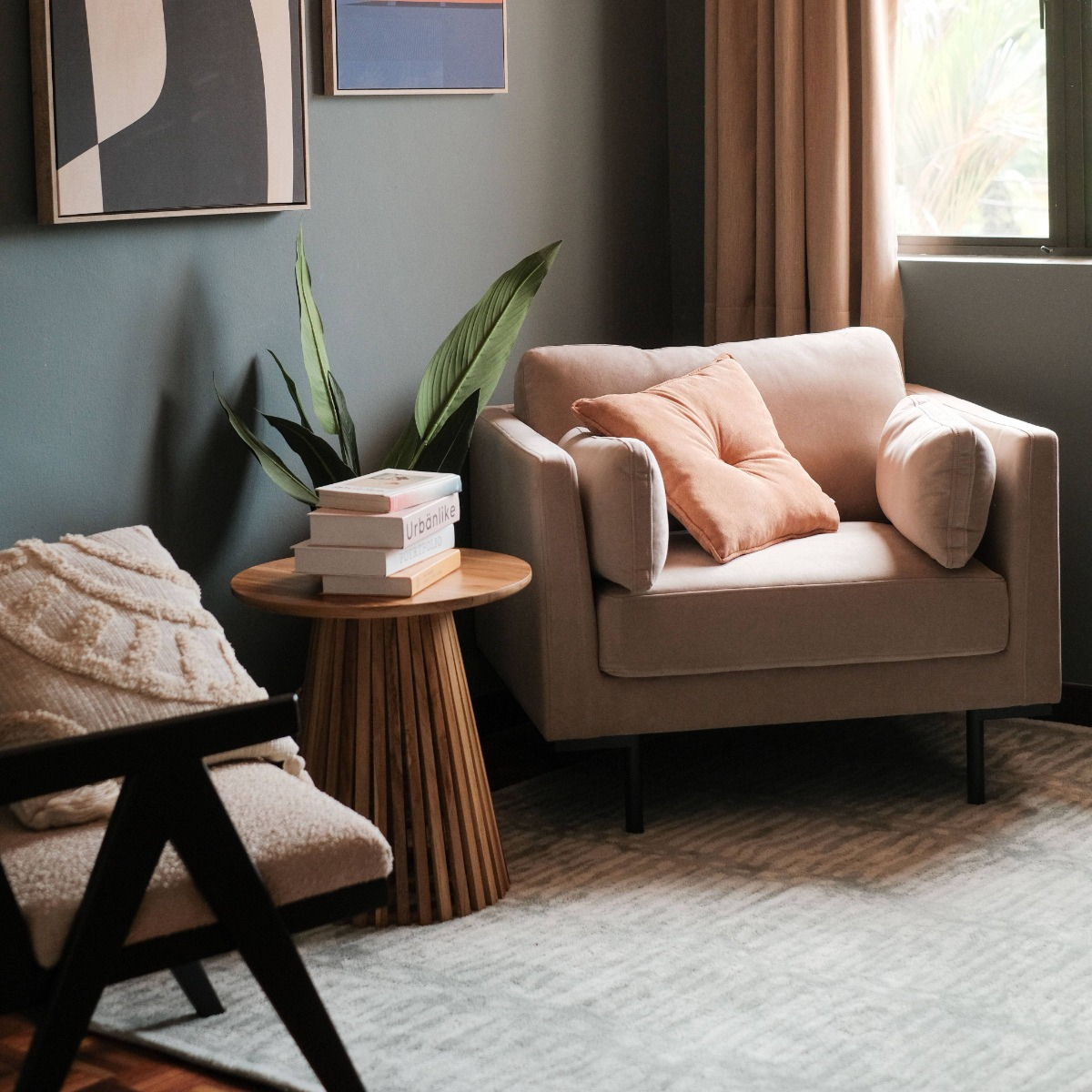
Which style of single sofa chair suits each room?
Living room
Choose a chair that relates to the size of the sofa and supports conversation. Position it at an angle or facing the main seating rather than leaving it isolated against a wall. A side table nearby gives guests somewhere to place a drink.
Bedroom
A compact lounge or accent chair can create a place to read, put on shoes or unwind. Check that it does not block wardrobes, bedside drawers or the route around the bed.
Reading corner
Prioritise comfort and task lighting. A supportive back, suitable arm height and a nearby side table are usually more valuable than choosing the smallest possible chair.
Small apartment or condominium
Consider a slim accent chair, compact lounge chair or matching 1-seater sofa with a controlled footprint. Measure the lift, corridor and doorway as well as the final room. A chair that can move between the living room and bedroom may provide better long-term flexibility.
Family room or television area
A recliner, swivel chair or lounge chair with an ottoman can provide personalised comfort. Remember to include the moving or extended footprint when planning the layout.
Which Ruma chair category should you explore?
Ruma's current range includes different forms rather than a single universal “single sofa chair.” Use the intended function to choose a category:
| If you want… | Explore… | Current Ruma example |
| A compact decorative seat | Accent chairs | Alma Oatmeal Accent Chair |
| A relaxed standalone chair | Lounge chairs | Frida Light Grey Lounge Chair |
| A matching sofa-style seat | 1-seater sofas | Jane Pebble Grey Mid-Century 1 Seater Sofa |
| Adjustable lounging | Reclining chairs | Zack Mist Grey Reclining Lounge Chair |
| Powered reclining | Power recliners | Alfie Copper Brown Power Reclining Lounge Chair |
| Gentle movement and flexible positioning | Swivel or glider chairs | Beatrice Cloud Beige Swivel Glider Lounge Chair |
Products, prices and availability can change. Use these examples to understand the chair types, then review the current specifications before purchasing.
Browse Ruma's current lounge chair and armchair collection or compare it with the wider sofa collection.
How should you test a single sofa chair before buying?
If the chair will be used frequently, visit a showroom and use this quick test:
-
Sit naturally instead of adjusting yourself to suit the chair.
-
Check whether your lower and upper back feel supported.
-
Rest your arms and notice whether your shoulders rise.
-
Confirm that the seat edge does not press behind your knees.
-
Sit upright, lean back and try your usual reading or television posture.
-
Stand up without pushing excessively on the arms.
-
Test every moving function and listen for unusual noise.
-
View the colour and texture under normal lighting.
Confirm that the specific model is on display before travelling. Display stock can differ between locations.
What should you check before ordering online?
Before adding a chair to your cart, confirm:
-
Overall and seat dimensions
-
Fully reclined or moving clearance, if relevant
-
Upholstery, frame, cushion and leg materials
-
Fixed or removable cushion covers
-
Product-care instructions
-
Packaged dimensions and weight
-
Assembly requirements
-
Delivery access to your home
-
Current stock or preorder status
-
Product-specific warranty coverage
-
Current exchange and return conditions
Ruma's current 14-Day Satisfaction Guarantee permits qualifying furniture exchanges or returns within 14 days of delivery, subject to conditions, exclusions and possible fees. Items must be in unused or as-new condition, and the original packaging requirements apply. Read the latest satisfaction guarantee terms before ordering rather than relying on a summary.
Common mistakes to avoid
Choosing by appearance alone
A chair can look perfect online but feel wrong for your body or intended use. Give dimensions, comfort and support equal weight.
Measuring only the empty corner
The chair still needs clearance from doors, tables and walking routes. Include the full footprint and any moving parts.
Assuming every one-person chair is compact
A 1-seater sofa or deep lounge chair can occupy considerably more space than a dining or accent chair. Always compare actual dimensions.
Forgetting the delivery route
The chair must pass through your entrance, corridors, stairwell or lift. Check packaged dimensions whenever they are available.
Buying a recliner without measuring it open
An adjustable chair needs additional space behind or in front, depending on its mechanism. Plan for its full operating range.
Ignoring care requirements
Choose upholstery you can realistically maintain. The best-looking material is not the best choice if it does not suit your household.
Single sofa chair buying checklist
Before you decide, ask:
-
What will the chair be used for most often?
-
Does the chair type match that purpose?
-
Have I measured the room and delivery path?
-
Is there enough walking and operating clearance?
-
Are the seat height and depth suitable for the main user?
-
Does the back provide the support I want?
-
Is the upholstery practical for my household?
-
Does the chair complement the room without overwhelming it?
-
Have I checked the materials, assembly and care instructions?
-
Have I reviewed the current warranty, delivery and return terms?
Find the right single sofa chair for your space
The perfect single sofa chair is not necessarily the biggest, softest or most striking option. It is the chair that fits your room, supports the way you like to sit and works with your daily routine.
Start by choosing the function, then compare measurements, comfort, material and construction. Once those essentials are right, use colour and style to make the chair feel at home in your space.
Explore Ruma's lounge chairs and armchairs to compare compact accent chairs, relaxing lounge chairs, recliners and other one-person seating options for Malaysian homes.
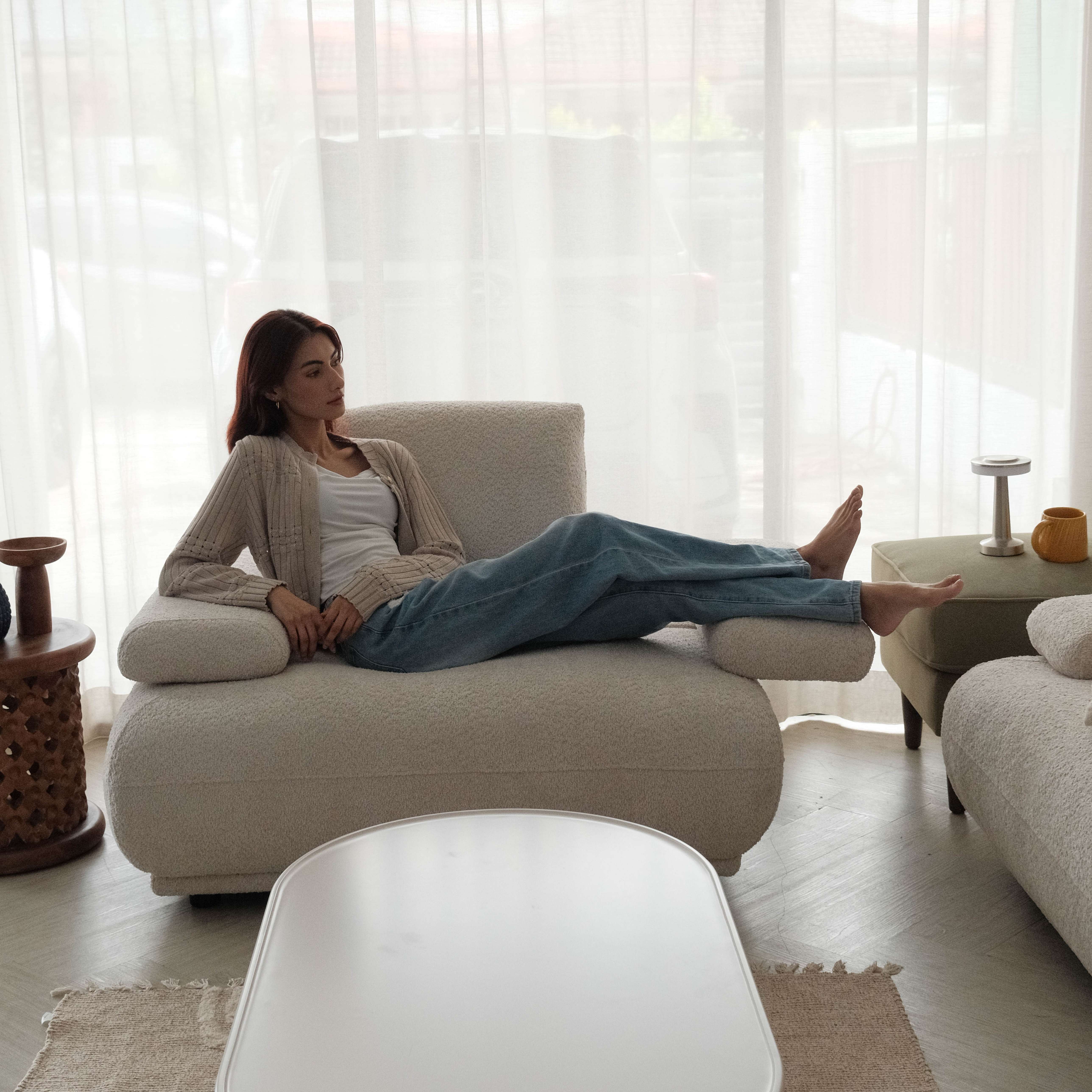
Frequently asked questions
What is a single sofa chair called?
A single sofa chair may be called a 1-seater sofa, armchair, lounge chair or accent chair. The most accurate term depends on its design and purpose. A 1-seater sofa resembles a sofa for one person, while an accent chair is usually selected partly for its decorative effect.
How do I choose a single sofa chair?
Choose the chair by deciding its main use, measuring the room and delivery route, testing the seat and back support, selecting practical upholstery, and checking its construction and style. Use the product's actual dimensions rather than relying on the word “single.”
What size single sofa chair is suitable for a small living room?
There is no universal ideal size. Measure the available floor area and mark the chair's complete width and depth before buying. Slim arms, a controlled depth and visible legs can help a chair feel less bulky in a compact room.
Is a single sofa chair the same as an accent chair?
Not always. “Single sofa chair” is a broad term for upholstered one-person seating. An accent chair is chosen to add visual interest and may be more compact or upright than a comfort-focused 1-seater sofa or lounge chair.
Is a lounge chair or 1-seater sofa better?
A lounge chair is often better for standalone relaxation, while a 1-seater sofa works well when you want sofa-like cushioning or a matching seating set. Compare seat depth, back height, dimensions and intended use rather than choosing by label alone.
Should a single chair match the sofa?
It does not need to match exactly. The chair can coordinate through colour, texture, leg finish, shape or scale. A contrasting accent chair can work well when at least one feature connects it to the rest of the room.
What chair is best for a reading corner?
A suitable reading chair should support your back, allow your feet to rest comfortably and keep your shoulders relaxed when using the armrests. Pair it with good lighting and a side table. Test the chair in your usual reading posture where possible.
What should I measure before buying a recliner?
Measure the chair in its upright and fully reclined positions. Include space for the footrest, movement behind the chair, nearby furniture, walking routes and access to a power point if it is an electric model.
Can I return a Ruma single sofa chair if it does not suit my room?
Qualifying furniture may be exchanged or returned under Ruma's 14-Day Satisfaction Guarantee, subject to current conditions, exclusions, item condition, packaging requirements and applicable fees. Review the latest policy before ordering.
Reviewed by the RUMA Editorial Team
The RUMA Editorial Team reviews home and furniture content to help readers make clearer buying decisions based on space, function and everyday living needs.
Editorial note: This guide provides general product-selection information and is not medical advice. Mattress comfort is subjective. Consult a qualified healthcare professional regarding persistent pain, allergies or other health concerns.
