
Last Updated: 14 August 2026
How to Choose the Right Rug for Your Dining Room
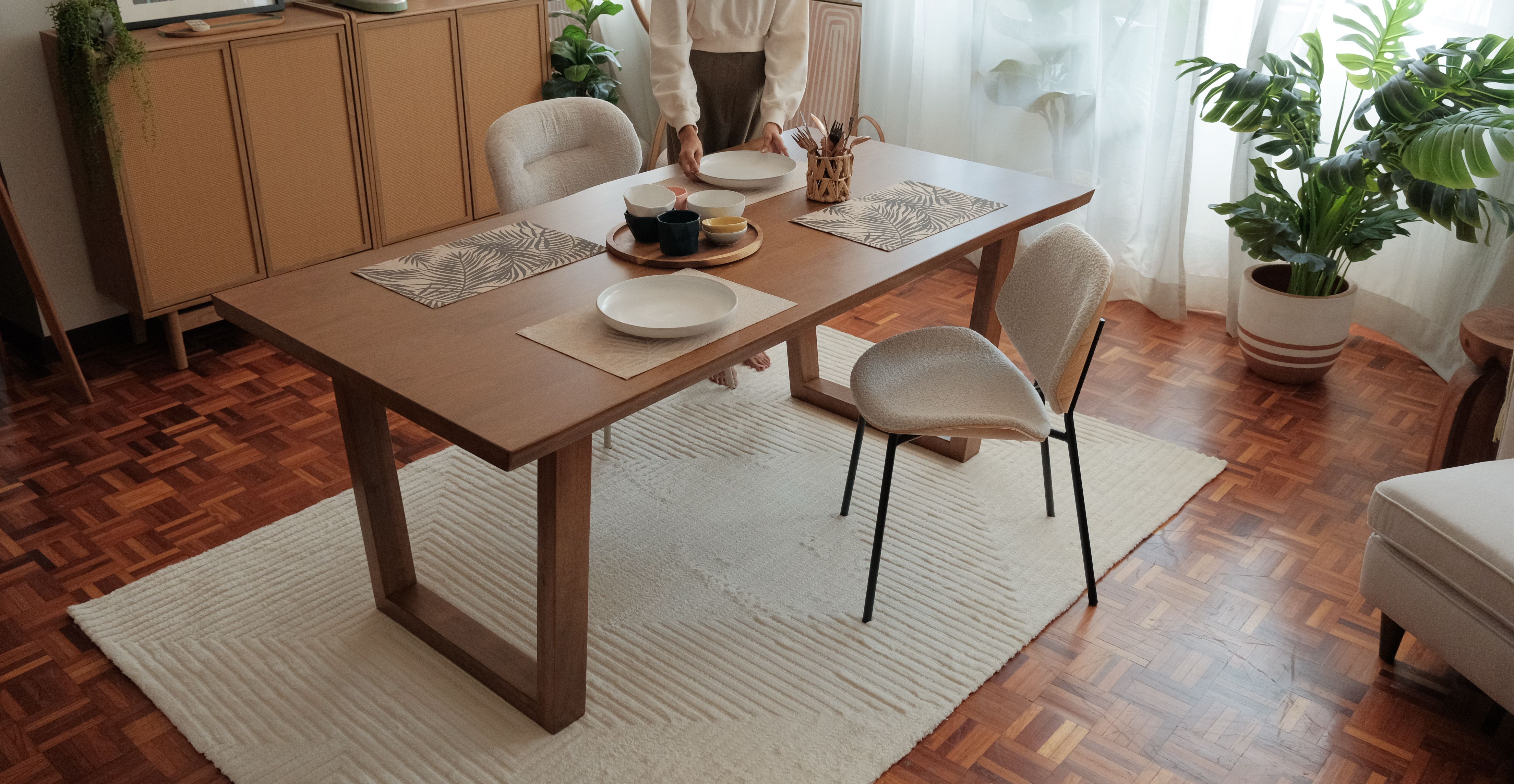
The best dining room rug is large enough for the table and every chair to remain on the rug—even when the chairs are pulled out. As a practical starting point, allow approximately 60 cm of rug beyond each side of the dining table, then confirm the measurement using your actual chairs and room layout. Choose a low-pile or flatwoven construction that allows chairs to move easily, and check the material's care instructions before buying.
A rug under the dining table can define an open-plan dining zone, add colour and texture, soften sound and protect part of the floor. However, it also needs to handle chair movement, crumbs and occasional spills. Size and maintenance should therefore come before colour or pattern.
This guide explains how to choose a dining room rug for a Malaysian home, from calculating the right dimensions to comparing shapes, materials and everyday care.
Dining room rug selection at a glance
| Decision | Practical starting point | Why it matters |
|---|---|---|
| Rug size | About 60 cm beyond the table on every side | Helps chairs remain on the rug when pulled out |
| Pile | Low pile or flatwoven | Easier chair movement and fewer trapped crumbs |
| Shape | Usually follows the table or dining zone | Creates a visually balanced arrangement |
| Material | Durable and compatible with your cleaning routine | Dining areas are exposed to traffic and spills |
| Pattern | Suits the room and expected maintenance | Mid-tone patterns can make everyday marks less prominent |
| Placement | Centred beneath the table and chairs | Anchors the complete dining arrangement |
| Rug pad | Suitable for both the rug and flooring | Can improve grip and cushioning when correctly chosen |
Should you put a rug under a dining table?
A rug is useful when you want to define the dining area, introduce softness or connect the table and chairs as one visual group. It can be especially effective in an open-plan Malaysian condominium, where the living and dining areas share the same flooring.
However, a rug is optional. Consider leaving the floor uncovered if:
-
the room cannot fit a rug large enough for pulled-out chairs;
-
the dining area experiences frequent spills that do not suit your cleaning routine;
-
chair legs would repeatedly catch on an undersized rug;
-
doors or nearby furniture would interfere with the rug; or
-
the flooring itself is an important visual feature you prefer to display.
The right choice depends on everyday use. A dining room without a rug can still feel complete through lighting, wall décor, table styling and coordinated chairs.
1. Measure the dining table and pulled-out chairs
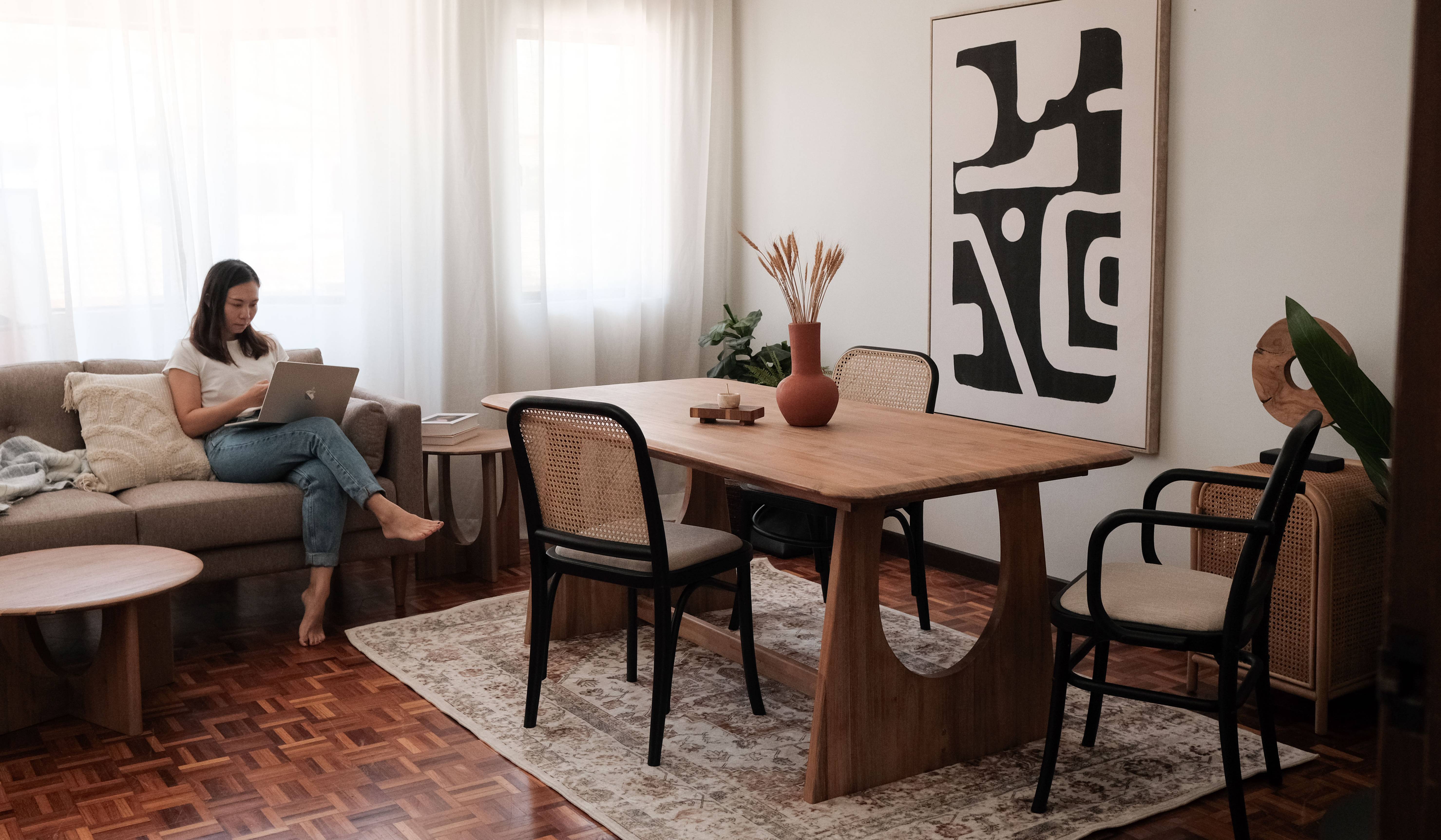
Do not choose a rug from the table dimensions alone. Dining chairs move beyond the tabletop whenever someone sits down or stands up, so the rug must accommodate their full working area.
Follow this method:
-
Measure the table's full length and width. If it extends, measure it in the position you use most often—or fully extended if you entertain regularly.
-
Pull each chair back to a comfortable sitting position.
-
Measure from the table edge to the back legs of the pulled-out chair.
-
Add that clearance to every relevant side of the table.
-
Mark the proposed rug outline on the floor with removable tape.
-
Test chair movement and walk around the arrangement before ordering.
Approximately 60 cm beyond each side of the table is a widely used starting point, but deeper chairs or a generous sitting position may require more. The functional test is simple: all chair legs should remain on the rug during normal use.
2. Calculate the right dining room rug size
Use this starting formula:
-
Rectangular or square table: table length + approximately 120 cm; table width + approximately 120 cm
-
Round table: table diameter + approximately 120 cm
This adds around 60 cm for chairs on each side. Round up to the next available rug size rather than choosing one smaller than the measured working area, provided the larger rug still fits the room.
Example dining room rug calculations
| Dining table size | Calculated starting rug size | What to do next |
| 120 × 75 cm rectangular table | About 240 × 195 cm | Choose the nearest larger available size that fits the room |
| 150 × 90 cm rectangular table | About 270 × 210 cm | Tape out candidate sizes and test every chair |
| 180 × 90 cm rectangular table | About 300 × 210 cm | Confirm clearance around side and end chairs |
| 120 cm round table | About 240 cm diameter | Test a round rug or a suitably sized square rug |
These are planning examples, not universal product prescriptions. Chair depth, table legs, benches, room dimensions and available rug sizes can change the best result.
Also leave a visible border of flooring between the rug and surrounding walls or fixed cabinets. The exact border will vary by room, but the rug should not appear wedged into the space or interfere with doors and walkways.
3. Match the rug shape to the table and room
Matching the rug shape to the dining table is a reliable approach, but the surrounding room also matters.
| Dining table | Rug shape to consider | Effect |
| Rectangular | Rectangular | Follows the table and suits most dining rooms |
| Round | Round | Creates symmetry and softens the room |
| Round | Square | Frames a round table with a more structured outline |
| Square | Square | Produces a balanced, centred composition |
| Oval | Rectangular or oval | Supports the table's length and curved form |
| Extendable | Rectangular | Accommodates the table's longer configuration |
You can mix shapes, but the rug must still support all chairs. A round rug beneath a rectangular table can work visually only if its diameter provides sufficient clearance at both the sides and ends.
In an open-plan room, the rug can follow the overall dining zone rather than the table alone. Aligning it with the table and pendant light helps the dining area read as a deliberate part of the larger space.
4. Choose a practical pile height
For most dining areas, a low-pile or flatwoven rug is the easiest to live with. Chair legs can move across it more smoothly, crumbs are less likely to disappear deep into the fibres and the surface is generally easier to vacuum.
Higher-pile or shag rugs can feel soft, but they may:
-
catch chair legs;
-
trap crumbs and debris;
-
become compressed beneath furniture; and
-
require more involved cleaning.
This does not mean every thick rug is unsuitable. If you prefer one, test chair movement and make sure its maintenance requirements suit your household. The product's construction and care instructions matter more than a style label alone.
5. Compare dining room rug materials
No single rug material is best for every dining room. Compare durability, texture, cleaning method and how frequently the table is used.
| Material or construction | Potential advantages | Points to check |
| Synthetic fibres | Often durable and available in many colours or patterns | Exact stain, heat and cleaning guidance varies by product |
| Wool | Resilient feel and natural texture | May require specific care or professional cleaning |
| Cotton | Lighter construction and casual appearance | Can move or crease; washing suitability depends on the label and size |
| Jute or other plant fibres | Adds natural colour and visible texture | Rougher surface and absorbency may complicate spill care |
| Blended fibres | Can balance appearance, durability and cost | Check the complete fibre composition and care instructions |
Do not assume that a rug is machine-washable, stain-resistant or suitable for a particular cleaner unless the product information explicitly says so. Even a washable rug may be too large or heavy for a household washing machine once wet.
In Malaysia's humid conditions, make sure a cleaned rug dries completely before returning it beneath heavy furniture. Follow the care label and maintain ventilation to discourage lingering moisture or odours.
6. Consider your household and dining habits
The best rug for a formal dining room may not suit a table used for every meal, homework and festive gatherings.
Homes with children
Prioritise easy access for cleaning, low pile and a pattern or mid-tone colour that does not show every small mark. Make sure the rug lies flat and does not create a tripping edge.
Homes with pets
Consider shedding, claws, pet hair and the cleaning products you normally use. Looped or highly textured constructions may not suit every pet, so check the weave and supervise how the rug performs.
Frequent entertaining
Measure the table in its extended configuration and include every additional chair. A rug that works for four people may become too small when the table seats six or eight.
Occasional dining spaces
You may have more flexibility with colour and texture if the room is used less frequently, but the rug should still allow chairs to move comfortably and meet its stated care requirements.
7. Select colour and pattern strategically
The dining room rug should connect the floor, table, chairs and surrounding room. It does not need to match them exactly.
Neutral rugs
Beige, cream, grey, brown and other restrained tones are versatile. Texture or a subtle pattern can prevent a neutral rug from appearing flat, especially beneath simple furniture.
Dark or mid-tone rugs
Mid-tone colours can be practical in a frequently used dining area because minor marks may be less prominent. Very dark rugs create contrast but may show pale crumbs, dust or pet hair more clearly.
Patterned rugs
A pattern can introduce movement and make everyday variation less noticeable. If the curtains, upholstery or wallpaper already have a strong pattern, select a quieter rug or repeat one of the existing colours.
Light rugs
Light colours can create an airy appearance but may require more frequent attention in a spill-prone space. Review the care instructions before committing.
A useful method is to choose one colour already present in the dining chairs, artwork or adjoining living area, then repeat it subtly in the rug. This helps an open-plan home feel connected.
8. Position and secure the rug correctly
Centre the rug beneath the dining table rather than in the room as a whole. The table, rug and overhead light should generally read as one composition, even when the dining area sits off-centre within an open-plan layout.
Once positioned:
-
confirm that every chair remains on the rug when pulled out;
-
make sure the rug does not obstruct doors or cabinets;
-
smooth any folds and allow a rolled rug time to settle according to its instructions;
-
avoid placing furniture partly on unstable edges; and
-
consider a rug pad if recommended.
A rug pad can improve grip, add cushioning and reduce movement, but it must be suitable for both the rug and the flooring underneath. Check the flooring manufacturer's guidance because some pad materials may not be appropriate for every finish. The pad should sit fully beneath the rug without protruding.
9. Plan cleaning and maintenance before purchasing
Dining-room maintenance is easier when you understand the care requirements from the start.
General habits include:
-
address spills promptly using the method stated on the care label;
-
avoid rubbing a spill aggressively, which can spread it or affect some fibres;
-
vacuum at a setting suitable for the rug's construction;
-
lift and clean beneath the rug periodically;
-
rotate the rug if permitted to distribute traffic and light exposure; and
-
arrange professional cleaning when the product instructions require it.
Always test a cleaning method in an inconspicuous area when the manufacturer recommends doing so. Avoid soaking the rug or applying unapproved chemicals. If liquid reaches the flooring below, dry both surfaces completely before replacing the rug.
Dining room rug ideas for Malaysian homes
Compact condominium dining area
Use a rug only if the room can accommodate the full chair movement area. A rug that is too small creates more inconvenience than visual benefit. In a tight layout, a bare floor with coordinated lighting and wall décor may be the better choice.
Open-plan living and dining room
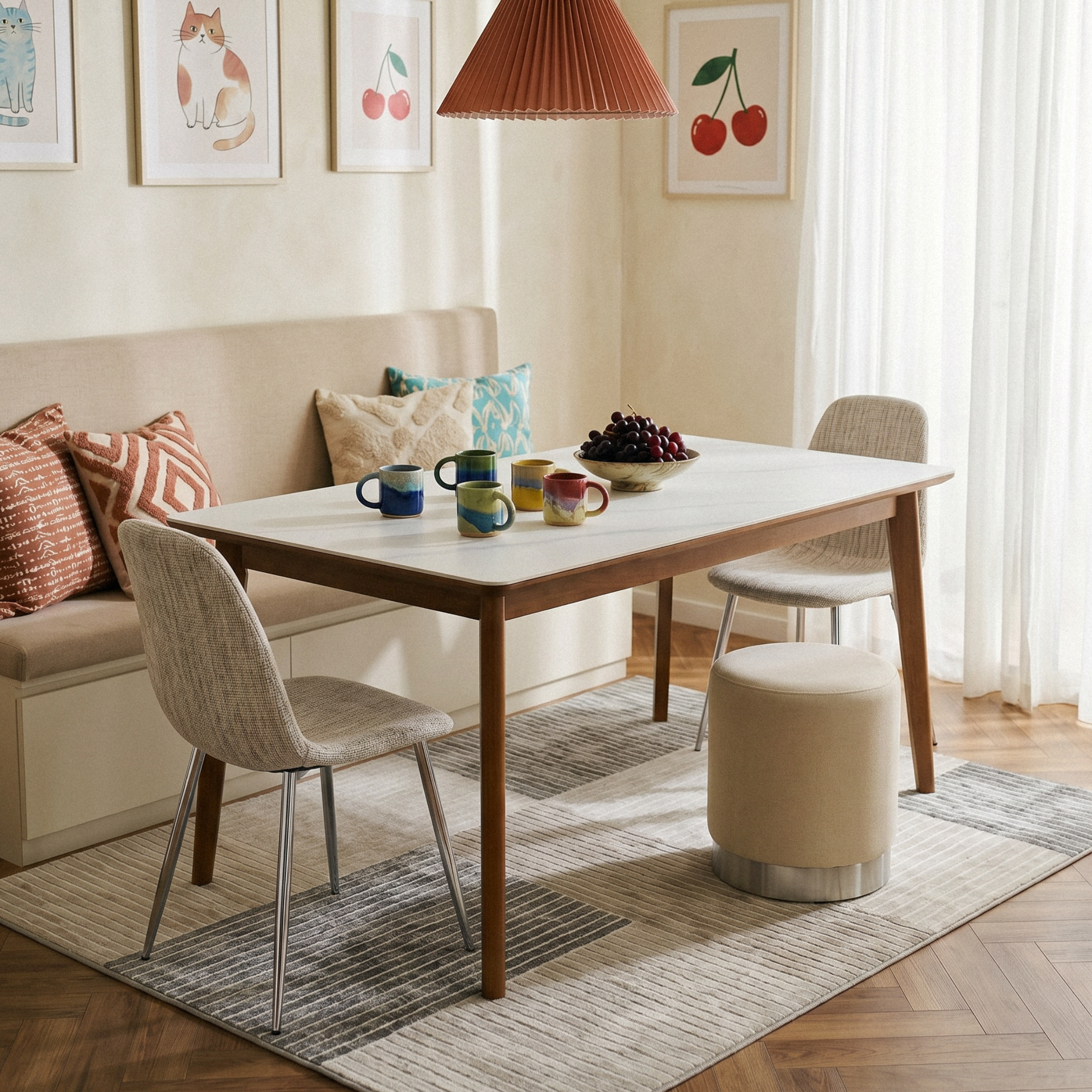
A dining rug can define the eating zone without adding a partition. Coordinate it with—but do not necessarily duplicate—the living-room rug. Repeat one colour or material so the spaces feel related.
Neutral modern dining room
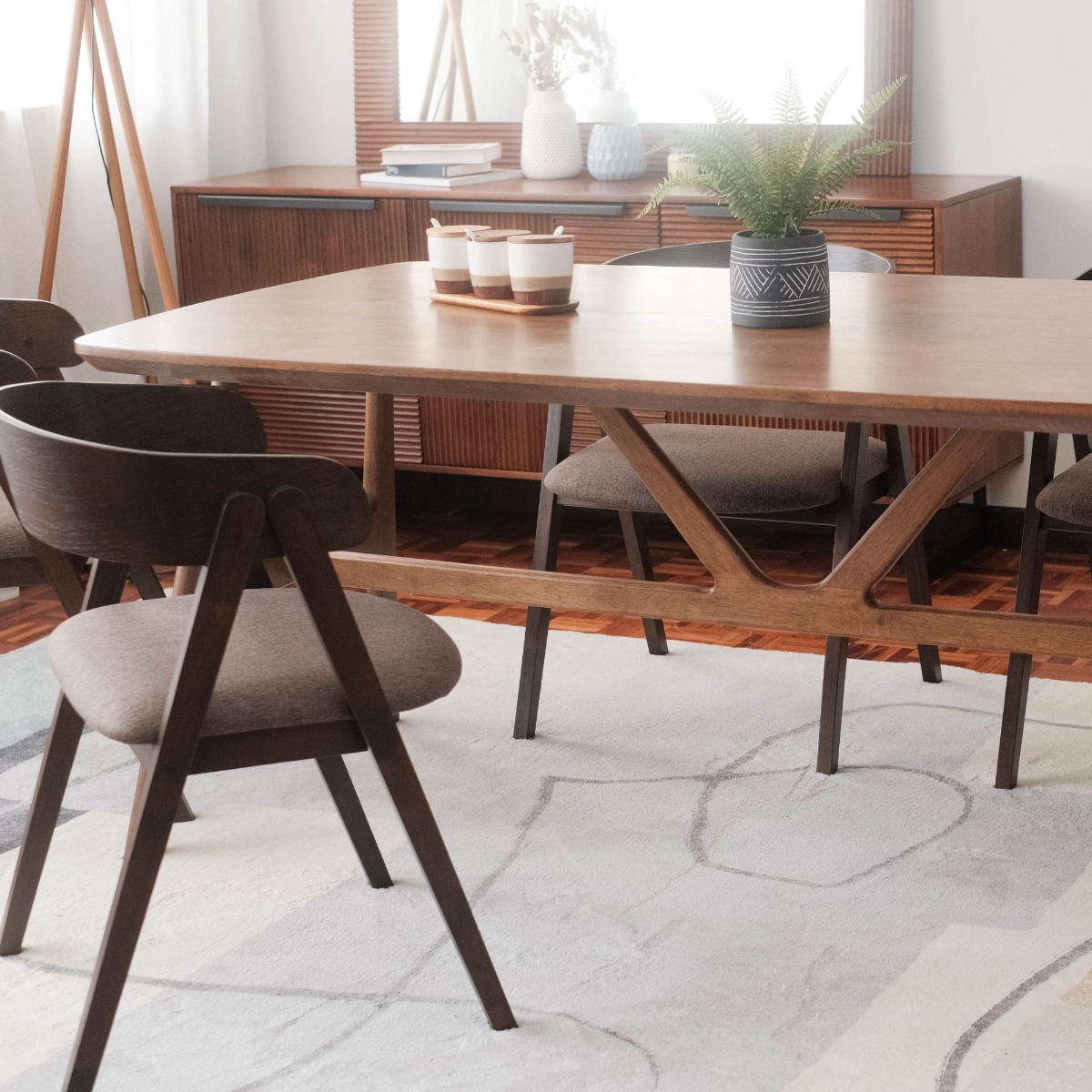
Introduce subtle pattern or texture to prevent the furniture from feeling disconnected. A low-contrast design can add depth while keeping the overall appearance calm.
Family dining space
Prioritise easy chair movement, accessible cleaning and a design that suits everyday use. A practical rug that remains in place is more valuable than a delicate option that must be removed frequently.
Browse Ruma's collection of rugs in Malaysia and compare the published dimensions, materials and care information with your dining-table measurements.
Common mistakes when choosing a rug under a dining table
Avoid these frequent problems:
-
Buying a rug only slightly larger than the tabletop. Chairs may catch on the edge whenever they are pulled out.
-
Measuring the table but not the chairs. The dining arrangement's working footprint is larger than the table.
-
Ignoring the extended table size. Extra leaves and chairs may no longer fit on the rug.
-
Choosing colour before construction. Pile, material and care affect daily use more than appearance alone.
-
Using a deep pile without testing chairs. Chair movement and cleaning may become difficult.
-
Assuming every synthetic or washable rug has the same care needs. Always check the specific label.
-
Forgetting doors and cabinets. A correctly sized rug should not prevent nearby furniture from opening.
-
Leaving curled or moving edges unsecured. Follow the rug instructions and use a compatible pad where appropriate.
-
Forcing a rug into a room that is too small. A rug is optional; comfort and circulation come first.
Dining room rug buying checklist
Before ordering, confirm:
Table length, width or diameter
Table dimensions when extended
Chair position when comfortably pulled out
Rug extending about 60 cm beyond each table side as a starting point
All chair legs remaining on the rug during normal use
Visible floor space between the rug and walls or cabinets
Door, drawer and walkway clearance
Low-pile or flatwoven construction if easy chair movement is a priority
Material and care instructions matching your household routine
Rug pad compatibility with the rug and flooring
Proposed size tested on the floor with removable tape
Find the right rug for your dining space
Choosing a dining room rug begins with movement, not decoration. Measure the table and pulled-out chairs, confirm that the rug fits the room, then compare pile, material and maintenance. Once those practical requirements are satisfied, colour and pattern can bring the whole dining area together.
Explore Ruma's rugs and floor décor alongside its dining tables and dining chairs to plan a comfortable, correctly proportioned dining arrangement.
Frequently asked questions about dining room rugs
Should you put a rug under a dining table?
A rug is optional, but it can define the dining zone, introduce colour and texture, soften sound and protect part of the floor. Use one only when the room can accommodate a rug large enough for the table and pulled-out chairs.
What size should a dining room rug be?
As a starting point, choose a rug that extends approximately 60 cm beyond every side of the table. Test the measurement with your actual chairs because all chair legs should remain on the rug when someone pulls a chair out.
How do you calculate rug size for a dining table?
For a rectangular table, add approximately 120 cm to both its length and width. For a round table, add approximately 120 cm to its diameter. Round up to a suitable available size that still fits the room, then test the outline and chair movement.
What rug size works under a six-seater dining table?
There is no single size for every six-seater because table and chair dimensions vary. Measure the table, add roughly 60 cm on every side and confirm that pulled-out chairs remain fully on the rug. A 150 × 90 cm table, for example, gives a starting rug calculation of about 270 × 210 cm.
Should a dining room rug match the table shape?
Matching shapes is a reliable option: rectangular rugs suit rectangular tables, and round rugs suit round tables. Other combinations can work when the rug fits the room and provides sufficient clearance for every chair.
What is the best pile for a dining room rug?
Low-pile and flatwoven rugs are practical because chairs move across them more easily and crumbs are less likely to become trapped. Always compare the specific construction and care instructions.
What material is best for a rug under a dining table?
Choose a durable material with care requirements that match your household. Synthetic, wool, cotton, plant-fibre and blended rugs have different advantages and limitations, so check the fibre composition and cleaning instructions rather than relying only on the material name.
Can you put a round rug under a rectangular dining table?
Yes, but the round rug must be large enough to support chairs at both the sides and ends. Because this often requires a very large diameter, a rectangular rug is usually easier to size beneath a rectangular table.
How do you keep a dining room rug clean?
Address spills promptly using the care-label method, vacuum at a setting suitable for the construction and clean beneath the rug periodically. Make sure the rug and floor dry completely after cleaning, and use professional care when specified.
Do you need a rug pad under a dining room rug?
A compatible rug pad can improve grip and cushioning, but it is not automatically suitable for every rug or flooring finish. Check the rug and flooring manufacturers' guidance and choose a pad that remains fully concealed beneath the rug.
Reviewed by the RUMA Editorial Team
The RUMA Editorial Team reviews home and furniture content to help readers make clearer buying decisions based on space, function and everyday living needs.
