
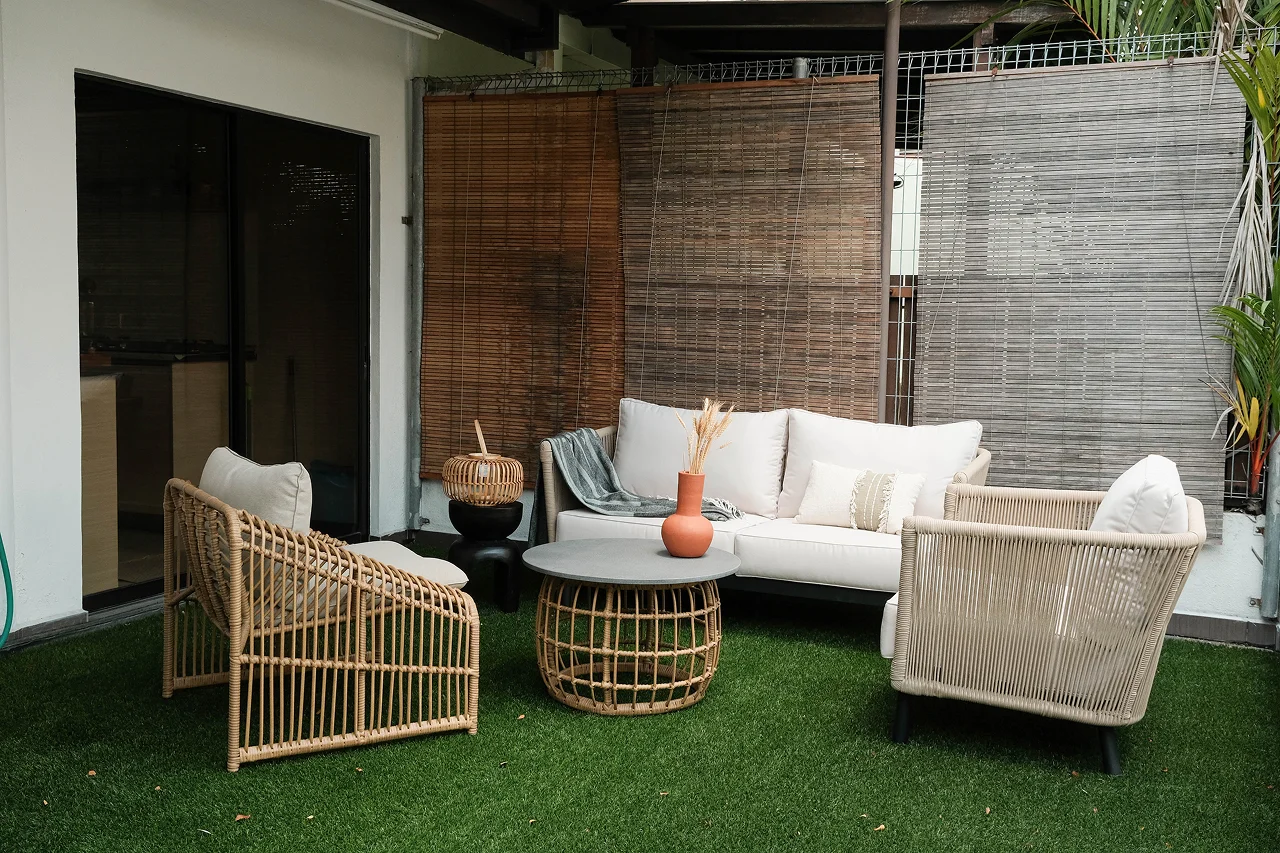
Caring for Outdoor Furniture in a Humid Malaysian Home
Key Takeaway
-
Good outdoor furniture care in Malaysia starts with drying. Never cover furniture or put cushions away while they're damp, since trapped moisture is how mould starts.
-
Clean with mild soapy water and a soft brush. Skip the pressure washer on acacia wood, synthetic rattan and woven bamboo, because strong jets can damage the surface or loosen the weave.
-
Textilene mesh seats drain rain straight through, so a wipe is enough. Foam seat cushions soak water up and need much longer to dry.
-
For outdoor cushion storage, a cushion that still feels cool or heavy isn't ready. Leave it out longer, then keep it somewhere airy, not sealed in a plastic bag.
-
Aluminium frames don't rust, but powder-coated metal can rust where the coating chips. Touch up chips as soon as you spot them.
Introduction
If you've ever lifted an outdoor cushion after a rainy week and found the underside damp, you've met Malaysia's humidity up close. Leave it a little longer, and dark specks can appear on a wooden armrest. The furniture you bought for slow evenings on the porch or balcony starts looking worn sooner than it should.
Outdoor furniture care here doesn't need to be complicated. Your set is made for the weather, but it needs a little help drying out when the air stays warm and wet. A few minutes after rain and a proper wash once a month go a long way.
Why Does Outdoor Furniture Care Matter More in Malaysia?
It's the moisture. In our hot, sticky weather, damp hides in cushion foam, wood joints and woven seats long after the rain has stopped, and anything that stays damp gives mould a chance to grow.
The rainy months make it harder still. The 2026/2027 northeast monsoon was forecast to run from late October to March, with three to five spells of continuous heavy rain between November and January. On weeks like that, your furniture may not get a single dry day on its own, so a quick wipe from you makes a real difference.
Those dark specks on wood or fabric are mould getting started. Wipe them off with mild soapy water and let the piece dry fully before they spread.
How Often Should You Clean Outdoor Furniture?
A light wipe every week and a proper wash about once a month is enough to keep dirt and mould from building up. If you like having a routine to follow, this outdoor furniture cleaning schedule keeps it easy:
|
When |
What to do |
Why it helps |
|
After rain |
Wipe seats and tabletops dry |
Stops water sitting in joints and weaves |
|
Weekly |
Brush off leaves, dust, and bird droppings |
Leaves trap damp, and droppings can stain |
|
Monthly |
Wash with mild soapy water, rinse and dry |
Lifts grime before mould takes hold |
|
Before you go away |
Bring cushions in and cover or store small pieces |
Nothing sits wet while you're gone |
Hosting a weekend barbecue or an open house outside? Give the table a wipe once the guests have gone home. Sugary spills left overnight are an open invitation for ants.
Which Cleaning Method Suits Wood, Metal and Rattan Furniture?
Outdoor pieces at ruma come in solid acacia wood, aluminium, synthetic rattan, woven bamboo and fabric. Mild soapy water, a soft brush and a cloth handle all of them. What changes is how gently you scrub and how you dry each one.
One thing to leave in the storeroom is the pressure washer. Strong jets can damage wood and loosen a weave. And if your piece came with a care label, check it first, since the maker knows it best.
Cleaning Acacia and Other Wooden Furniture
Some of ruma's outdoor chairs and modular sofas have solid acacia frames. Scrub gently along the grain with soapy water, rinse, and wipe them dry. Then let them finish drying in the shade, where they dry evenly instead of too fast in strong sun. If the rain reaches your wooden pieces, move them under cover during wet spells to keep solid wood away from direct rain and excess moisture.
Cleaning Aluminium and Powder-Coated Metal Frames
You'll find aluminium frames on ruma's outdoor sofas and lounge chairs, and powder-coated metal on some of its dining chairs. A damp cloth and a quick dry are all they need, with a little extra attention on the joints and feet where water likes to sit. Aluminium won't rust, but powder-coated frames can rust where the coating chips. If you spot a chip, a dab of matching touch-up paint seals it.
Cleaning Synthetic Rattan and Woven Bamboo
For woven seats and backs, a soft brush or the brush tip on your vacuum lifts dust out of the gaps. Then follow with a damp cloth. Rattan stands up well outdoors, and synthetic rattan is happy with a rinse. Woven bamboo, used on some ruma frames, prefers a damp cloth to a soaking. After rain, tilt woven pieces for a moment so trapped water can run out.
Washing Fabric Seats and Cushion Covers
If your chair has a textiline seat, the coated mesh on some ruma outdoor chairs, you're in luck. Water drains straight through, so a soapy wipe and some air are enough. Foam seats are a different story, because the foam keeps holding water long after the fabric feels dry. For covers that come off, zip them closed first so the zip doesn't snag in the wash, and follow the care label. Dry them somewhere breezy and shaded to keep bright colours from fading, and only put them back on once they're dry right through.
Where Should Outdoor Cushions Go Between Uses?
Dry first, then store them somewhere with a bit of air. That's the whole secret to outdoor cushion storage. A cushion put away damp has nowhere to let the moisture out, and that's when mould starts growing inside.
A few habits keep cushions fresh between uses:
-
Stand damp cushions on their edge so water drains out and both sides dry.
-
Bring them in before heavy rain, or at night if you won't sit outside the next day.
-
Keep them in a ventilated cupboard, a basket or a storage bench, not a sealed plastic bag.
-
Every now and then, give stored cushions a shake and an hour in the sun.
Keeping that basket or bench right by the door helps more than you'd think. When bringing cushions in takes seconds, it's easy to do every time the sky turns grey.
If a cushion still feels cool or heavy, it's probably damp inside. Give it a little longer before you put it away.
What Does Furniture on a Covered Patio or Porch Need?
Give it airflow and keep its legs dry. A roof keeps off direct rain, but a windy storm can still blow showers in sideways, and humid air still reaches furniture under a roof. That means covered patio furniture care is about helping things dry, not just keeping rain off.
On a car porch, patio, or covered balcony, pull your furniture a little away from the wall so air can move behind it. Furniture pads under the legs keep them out of puddles after a storm. If you like using covers, pick breathable ones and only put them on once the furniture is completely dry. A cover over damp furniture is how mould and water marks sneak in.
Dust and fallen leaves still find their way onto covered pieces. A quick brush once a week stops them turning into a damp, grimy layer during the rainy months.
How Do You Care for Outdoor Furniture in Malaysia?
Good outdoor furniture care in Malaysia means keeping pieces dry and clean. Wipe off rain the same day, brush off leaves weekly, and wash with mild soapy water monthly. Store cushions only when fully dry, in a ventilated spot. For covered patio furniture care, leave space behind each piece and lift legs off wet tiles.
Frequently Asked Questions
1. What outdoor furniture care do I need during the monsoon?
The frames can stay out if they're made for outdoor use, but bring the cushions in. After each heavy downpour, wipe everything dry and tilt woven pieces so trapped water drains out. If strong winds are forecast, move small, light pieces under cover.
2. How do I get rid of mould on outdoor cushions?
Brush off loose mould outside, so the spores don't spread indoors. Then take off the cover and wash it as its care label says. Let the cushion insert dry fully somewhere breezy and sunny, where the sun helps dry out the filling. If the mould keeps coming back, the filling may be holding moisture and needs replacing.
3. How do I clean bird droppings off outdoor furniture?
Get to them as soon as you can, since dried droppings can stain. Lay a cloth soaked in mild soapy water over the spot for a few minutes to soften it, then wipe it away gently instead of scraping. A quick look for droppings during your weekly outdoor furniture cleaning saves you a harder job later.
4. How do I stop metal outdoor furniture from rusting?
If your frames are aluminium, you're already covered, since aluminium doesn't rust. For powder-coated metal, check the feet and joints after rain, where water sits longest, and touch up any chipped paint straight away. Furniture pads under the legs also keep them out of puddles.
5. Can I bring outdoor furniture indoors during the wettest weeks?
Yes, and it's a simple way to protect lighter pieces. Folding stools and folding tables pack flat, and ruma's indoor/outdoor dining chairs work just as well at your dining table. Just dry each piece before bringing it in, so you don't carry damp into the house.
Outdoor furniture care in a humid Malaysian home starts with one habit: don't let things stay wet. Wipe pieces dry after rain, give them a wash once a month, and only store cushions when they're dry right through. Under a roof, a little airflow and dry legs do the rest. Keep that up, and your porch or balcony stays ready for slow evenings outside, whatever the weather. When you're ready to add a piece or two, explore ruma's outdoor furniture, from acacia wood chairs to aluminium-framed outdoor sofas and indoor/outdoor dining chairs.
Reviewed by the RUMA Editorial Team
The RUMA Editorial Team reviews home and furniture content to help readers make clearer buying decisions based on space, function, and everyday living needs.
