
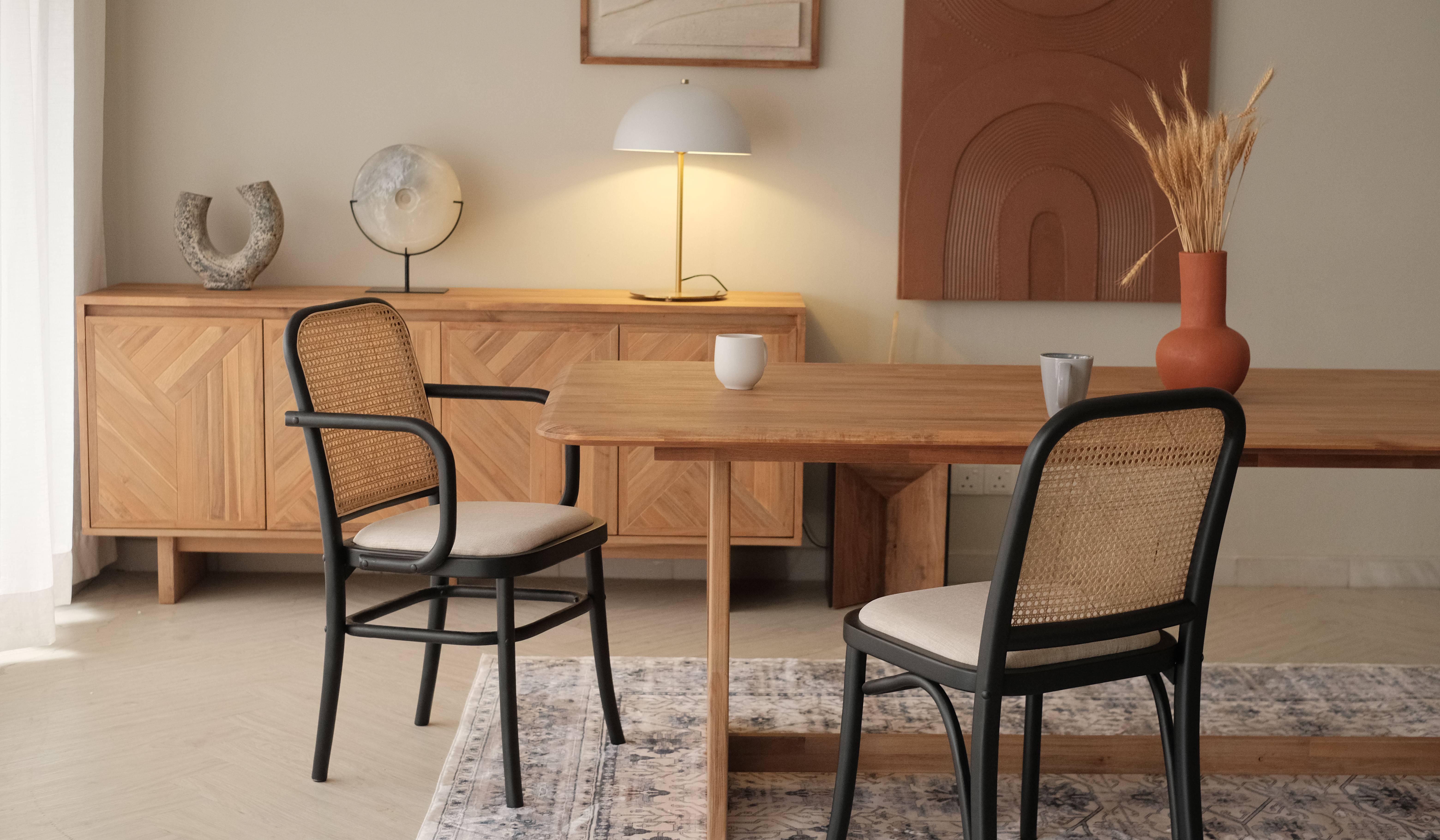
Last Updated: 8th September 2026
Choosing a dining table is not only about finding a design you like. The table also needs to fit your room, leave enough space for people to move, seat the right number of guests and cope with the way your household uses it every day.
For most Malaysian homes, a 4-seater dining table is about 120–140cm long, a 6-seater is about 150–180cm, and an 8-seater is about 200–240cm. Aim for approximately 90cm of clear space around the table wherever people need to pull out a chair and walk behind it.
Those figures are useful starting points, but the best dining table for your home also depends on the shape of the room, the table base, the chairs and whether you use the dining area only for meals or also for work, homework and entertaining.
This guide takes you through the decision step by step.
Quick dining table size chart
Use this table as a practical starting point. Exact seating capacity can vary according to the width of your dining chairs, the position of the table legs and the design of the base.
|
Seating capacity |
Rectangular or oval table |
Round table |
Usually suits |
|
2–4 people |
80–120cm long × 75–90cm wide |
80–100cm diameter |
Studio, compact apartment or breakfast area |
|
4 people |
120–140cm long × 75–90cm wide |
100–110cm diameter |
Couple, small family or compact dining space |
|
6 people |
150–180cm long × 85–100cm wide |
120–140cm diameter |
Most family homes and regular entertaining |
|
8 people |
200–240cm long × 90–110cm wide |
150–170cm diameter |
Larger family, frequent host or landed home |
|
10 people |
240–300cm long × 100–120cm wide |
Usually less practical at this capacity |
Large dining room and frequent gatherings |
Allow roughly 55–60cm of table edge per person for comfortable everyday seating. Wider dining chairs or armchairs may need more.
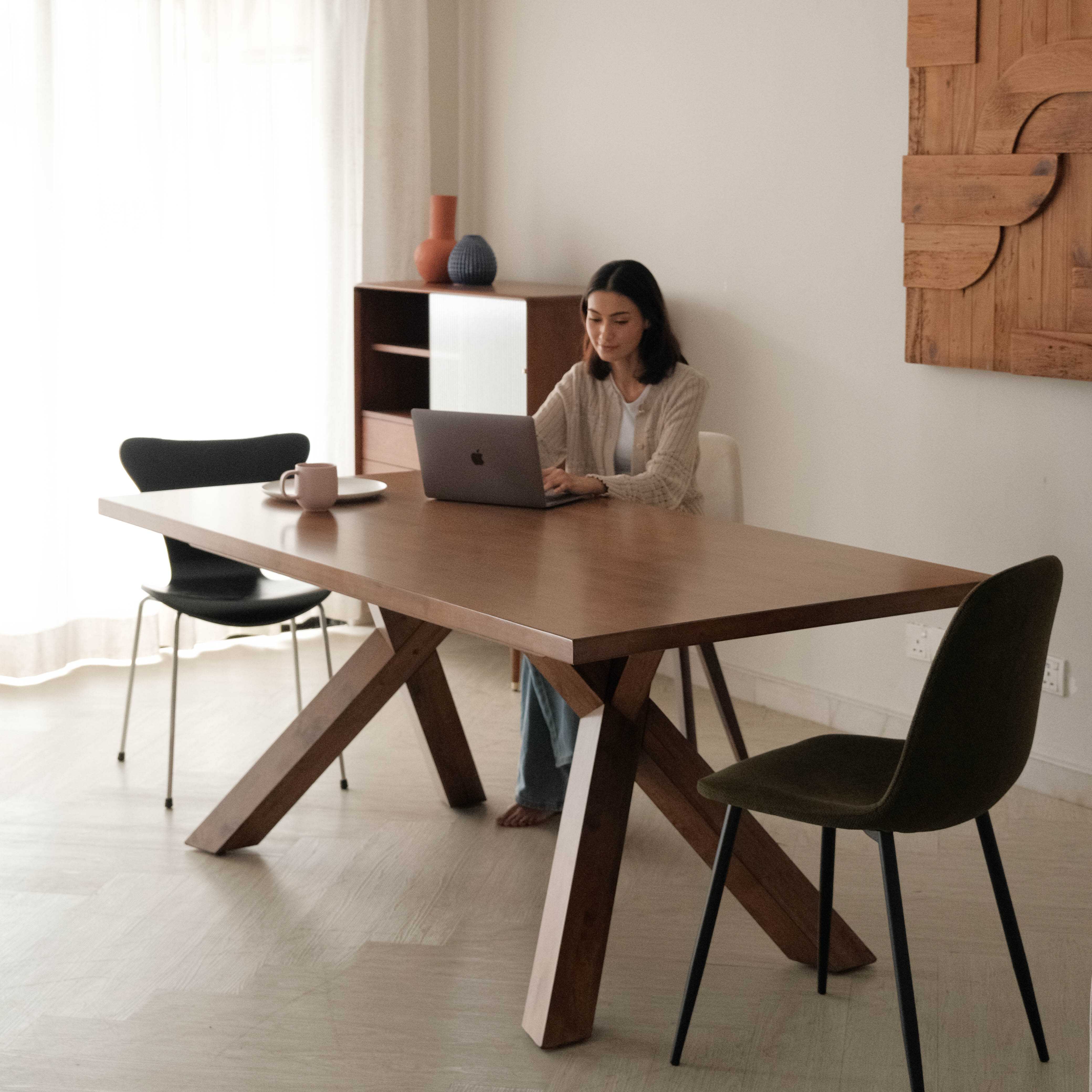
1. Measure the dining area before choosing a table
Start with the available room, not a table you have already fallen in love with.
Measure the length and width of the dining area, including anything that affects movement around it:
-
walls and columns;
-
kitchen counters or islands;
-
sideboards and cabinets;
-
door swings;
-
balcony or kitchen walkways; and
-
the route people use to move through the room.
How much clearance should a dining table have?
Aim for about 90cm between the table edge and the nearest wall or furniture on sides where chairs are used. This gives someone room to pull out a chair and sit down.
If people must regularly walk behind seated diners, 100–120cm is more comfortable. In a very compact home, a tighter clearance may be workable on a low-traffic side, but it can feel cramped once the chairs are occupied.
A simple way to calculate the maximum table size
For a dining area measuring 300cm × 270cm, subtract 180cm from both dimensions to allow a 90cm clearance on every side:
-
Maximum table length: 300cm − 180cm = 120cm
-
Maximum table width: 270cm − 180cm = 90cm
A table around 120cm × 90cm should fit comfortably in this example.
If one side is an open, unused edge rather than a wall or walkway, you may have more flexibility. Always test the full layout with the chairs included.
Practical tip: Mark the tabletop dimensions on the floor with masking tape. Then place a chair where each seat will go and pull it out as if you were sitting down. This quickly reveals whether the layout blocks a doorway, cabinet or main walkway.
2. Choose the right dining table size for your household
Do not size the table only for the biggest gathering of the year. Think first about how many people use it most days, then decide how much spare capacity you genuinely need.
What size is a 4-seater dining table?
A rectangular 4-seater dining table is commonly around 120–140cm long and 75–90cm wide. A round table for four is typically about 100–110cm in diameter.
This size works well for couples, young families and smaller apartments. If the room is narrow, check whether the chair backs obstruct the main path between the living room and kitchen.
What size is a 6-seater dining table?
A rectangular 6-seater dining table is generally around 150–180cm long and 85–100cm wide. A round 6-seater is usually about 120–140cm in diameter.
This is a versatile choice for many Malaysian families: compact enough for everyday meals but roomy enough for guests. If you want to place a chair at each end, make sure the table legs or base do not reduce legroom.
What size is an 8-seater dining table?
A rectangular 8-seater dining table is usually around 200–240cm long and 90–110cm wide. A round table may need a diameter of roughly 150–170cm, although a large round top can make food in the centre harder to reach.
An 8-seater suits households that host often or have a larger dining room. Before buying, confirm that the table can be delivered through the entrance, lift, stairway and internal doors.
3. Match the dining table shape to the room
The best table shape normally follows the proportions of the room.
Rectangular dining tables
A rectangular dining table is often the most practical option for a long or open-plan dining area. It uses length efficiently, can seat more people and gives serving dishes plenty of space.
Choose rectangular when:
-
the dining area is longer than it is wide;
-
you need six or more seats;
-
the table will sit parallel to a kitchen counter or wall; or
-
you regularly serve several shared dishes.
Round dining tables
A round dining table can improve movement in a compact or square space because it has no sharp corners. Everyone faces towards the centre, which also makes conversation feel more inclusive.
Choose round when:
-
the room is small or approximately square;
-
you mainly need four to six seats;
-
the dining area is also a circulation zone; or
-
you prefer a softer look with easier conversation.
A round table is not automatically the smallest option. Compare its full diameter and chair clearance with a compact rectangular table before deciding.
Oval dining tables
An oval dining table combines much of the seating capacity of a rectangular table with softer corners. It can work especially well in an open-plan room where people walk around both ends of the table.
Square dining tables
A square table suits a square room and creates an intimate arrangement for two to four people. Very large square tables are less practical because the centre can become difficult to reach.
Extendable dining tables
An extendable table is useful when the household is small on ordinary days but hosts family and friends occasionally. Check the table's dimensions in both positions and make sure the room still has enough chair and walkway clearance when it is fully extended.
4. Choose a tabletop material for the way you live
The best dining table material is the one that matches your priorities. Consider the appearance, daily maintenance, resistance to spills and heat, weight and how gracefully the surface will age.
|
Tabletop material |
Main strengths |
Considerations |
Best for |
|
Solid wood |
Warm, timeless and can develop character over time |
Can scratch, stain or react to moisture; care depends on finish |
Buyers who value natural variation and longevity |
|
Wood veneer or engineered wood |
Consistent appearance and often more accessible in price |
Protect edges and follow the specific care instructions |
Everyday homes seeking a wood look with practical value |
|
Sintered stone |
Low-porosity surface with strong resistance to everyday heat, stains and scratches |
Heavy; edges can still chip from a hard impact |
Busy families and low-maintenance households |
|
Ceramic |
Easy to wipe and generally resistant to heat and stains |
Hard feel; impact performance depends on construction |
Frequent cooking, entertaining and easy upkeep |
|
Natural marble |
Distinctive natural veining and a premium appearance |
Porous and sensitive to acidic spills unless properly protected |
Design-led homes prepared for regular care |
|
Glass |
Visually light and can make a room feel more open |
Shows fingerprints and requires frequent wiping |
Compact interiors where visual openness matters |
No surface is completely maintenance-free. Follow the product care instructions, wipe spills promptly and use mats or trivets when the manufacturer recommends them.
Is sintered stone or wood better for a dining table?
Choose sintered stone if your main priorities are easy cleaning and resistance to the mess of everyday meals. Choose wood if you want warmth, natural character and a surface that feels softer visually.
The right answer depends less on which material is “best” and more on your household. A family with young children may prioritise wipeability, while someone creating a warm, tactile dining room may prefer wood.
Browse ruma's scratch- and heat-resistant dining tables if easy everyday upkeep is high on your list.
5. Check the table base and leg position
Two tables with identical dimensions may not seat the same number of people. The base determines where chairs fit and how much legroom each person receives.
Four-leg tables
Four-leg designs are stable and familiar, but the corner legs can restrict chair placement. Measure the clear distance between the legs rather than relying only on the tabletop length.
Pedestal tables
A central pedestal may make it easier to position chairs around the edge, particularly on round or oval tables. Check how far the base spreads across the floor, as a wide base may affect foot space.
Trestle and statement bases
Trestle or sculptural bases create a strong visual feature and can support larger tops. Sit at every intended position before buying to make sure knees, feet and chair legs do not clash with the structure.
6. Make sure the dining chairs fit the table
A dining table is only comfortable when the chairs fit under and around it properly.
Most dining tables are approximately 74–76cm high, while many dining-chair seats are about 43–48cm high. As a general guide, look for roughly 25–30cm between the chair seat and the underside of the tabletop or apron.
Also check:
-
the chair width, especially for upholstered or armchair-style seats;
-
whether chair arms fit below the table;
-
the clear space between table legs;
-
the thickness of the tabletop and apron; and
-
whether every chair can be pulled out without blocking a walkway.
If you are mixing chairs rather than buying a matching set, take the chair measurements with you when comparing tables. Explore ruma's dining chairs to compare shapes, upholstery and proportions.
7. Choose for real life, not only for mealtimes
In many homes, the dining table also functions as a homework desk, laptop station, craft surface, buffet counter and gathering place. Your daily habits should influence the final choice.
For a compact apartment or condominium
Consider a 2–4-seater round or rectangular table with slim legs and visually light proportions. A bench that tucks fully underneath can free up circulation space when it is not in use.
For a family with children
Prioritise an easy-care surface, stable construction and corners that suit your household. Make sure the table is large enough for meals and homework without overwhelming the walkway.
For people who entertain
Look for a 6–8-seater or extendable table, enough tabletop depth for shared dishes and a base that allows flexible chair placement. Measure the room in the table's largest configuration.
For an open-plan home
Choose a table that relates to the lines and materials already in the living area. An oval or round design can soften a room dominated by straight cabinetry, while a rectangular table can reinforce a long layout.
Dining table buying checklist
Before placing an order, confirm the following:
-
The dining area's length and width are measured.
-
There is about 90cm of chair clearance where possible.
-
High-traffic walkways have additional room.
-
The table seats the household comfortably on normal days.
-
Chair widths and table-leg positions have been checked.
-
The material suits the household's maintenance expectations.
-
The table fits through the lift, entrance, doors and stairway.
-
The table height works with the chosen chairs.
-
Power sockets, pendant lights and nearby cabinets remain accessible.
-
The full extended size has been measured, if applicable.
Find a dining table that fits your home
The right dining table should make everyday life easier: there should be room to sit comfortably, move around naturally and enjoy the space even when the table is not being used for a meal.
Start with your room measurements, choose the seating capacity you use most often, then compare shapes, surfaces and bases. Once those practical decisions are settled, it becomes much easier to choose a design that feels at home in your interior.
Explore dining tables at ruma, shop online or visit a ruma store to compare dimensions, materials and finishes in person.
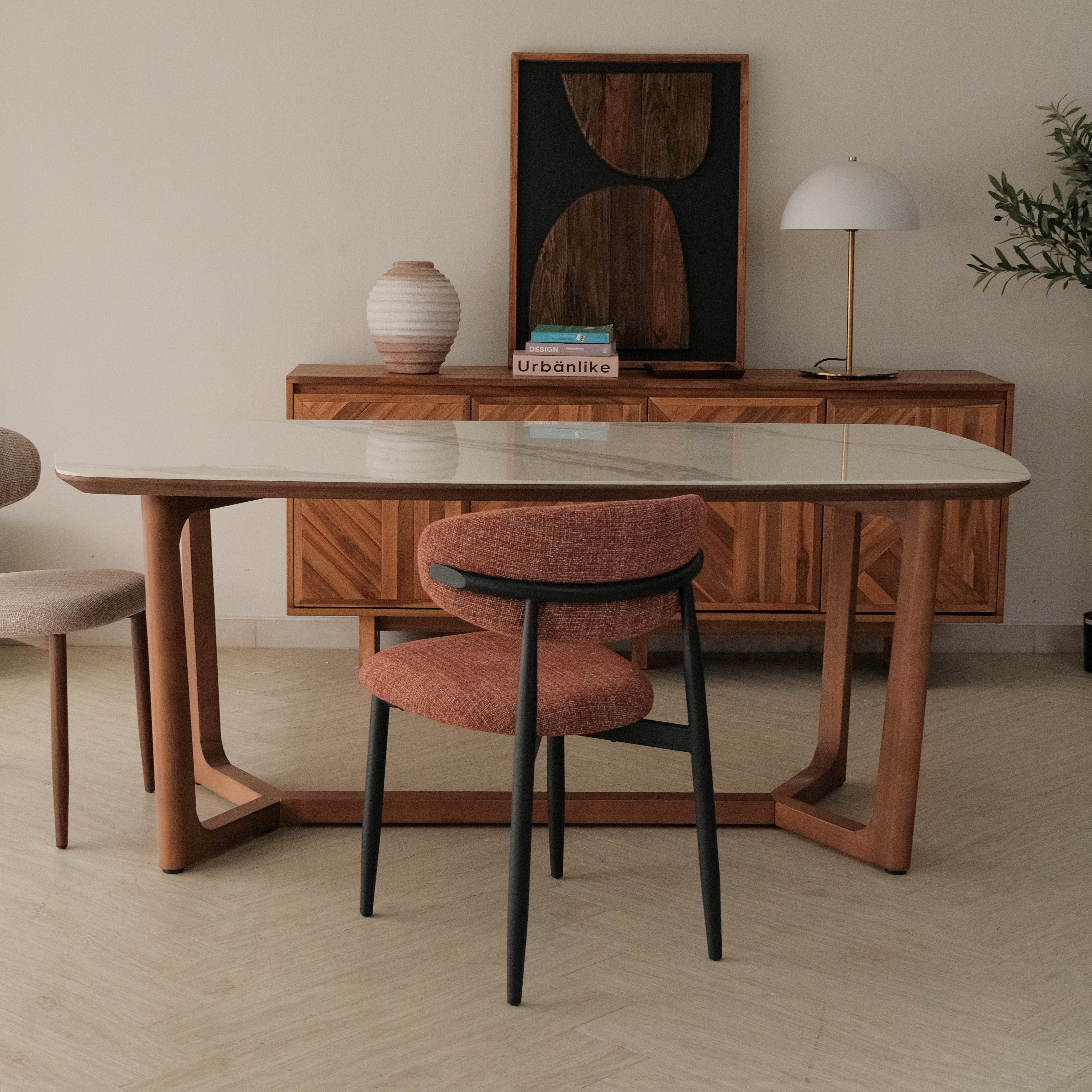
Frequently asked questions about dining tables
What is the standard height of a dining table in Malaysia?
Most dining tables are approximately 74–76cm high. Comfort also depends on the chair: aim for about 25–30cm between the chair seat and the underside of the tabletop or apron.
How much space should I leave around a dining table?
Aim for approximately 90cm between the table edge and a wall or nearby furniture where chairs are used. Allow around 100–120cm on a side where people regularly walk behind seated diners.
What size dining table is suitable for six people?
A rectangular table about 150–180cm long and 85–100cm wide generally seats six. A round table for six is usually around 120–140cm in diameter. Actual capacity depends on chair width and the table-base design.
Is a round or rectangular dining table better for a small space?
A round table often improves movement in a compact, square room because it has no corners. A rectangular table usually fits a narrow room or wall-aligned layout better. Compare the full table-and-chair footprint rather than the tabletop alone.
Which dining table material is easiest to maintain?
Sintered-stone and ceramic surfaces are generally practical choices for frequent use because they are easy to wipe and resist many everyday stains and heat. Performance varies by product, so always check the manufacturer's care guidance.
How do I know whether dining chairs will fit under a table?
Compare the chair width and arm height with the clear distance between the table legs and the height beneath the tabletop or apron. Allow roughly 25–30cm between the seat and the underside of the table for comfortable legroom.
Reviewed by the RUMA Editorial Team
The RUMA Editorial Team reviews home and furniture content to help readers make clearer buying decisions based on space, function and everyday living needs.
