

Last Updated: 14 August 2026
How to Style a Modern Dining Table: Ideas for Malaysian Homes
To style a modern dining table, begin with a simple focal point, coordinated tableware and chairs that complement the table without necessarily matching it. Use a restrained colour palette, combine two or three materials for contrast and leave enough empty surface for comfortable everyday dining. The result should look considered without making the table difficult to use.
The best dining table styling also responds to the table's shape, size and material. A compact round table needs a different arrangement from a long rectangular table, while wood, marble and glass each suit different textures and accessories.
Whether you are refreshing a condominium dining corner, an open-plan space or a larger family dining room, the following ideas will help you balance modern style with the practical needs of a Malaysian home.
Modern dining table styling at a glance
| Dining table or need | Styling approach | What to avoid |
|---|---|---|
| Wooden dining table | Add ceramics, linen and clear glass | Too many competing wood tones |
| Marble or stone-look table | Use restrained metal, glass or neutral accents | Covering the surface completely |
| Glass dining table | Add texture through fabric, ceramics or woven details | Too many transparent accessories |
| Round dining table | Use one central arrangement | Long, rectangular runners that fight the shape |
| Rectangular dining table | Use a runner or a low grouping along the centre | One undersized object that feels lost |
| Small dining area | Choose one low, easy-to-move centrepiece | Permanent displays that reduce usable space |
| Everyday family dining | Keep the centre clear and store extras nearby | Fragile decorations that must be moved at every meal |
| Festive entertaining | Layer colour, serving pieces and warm lighting | Adding so many elements that guests lack elbow room |
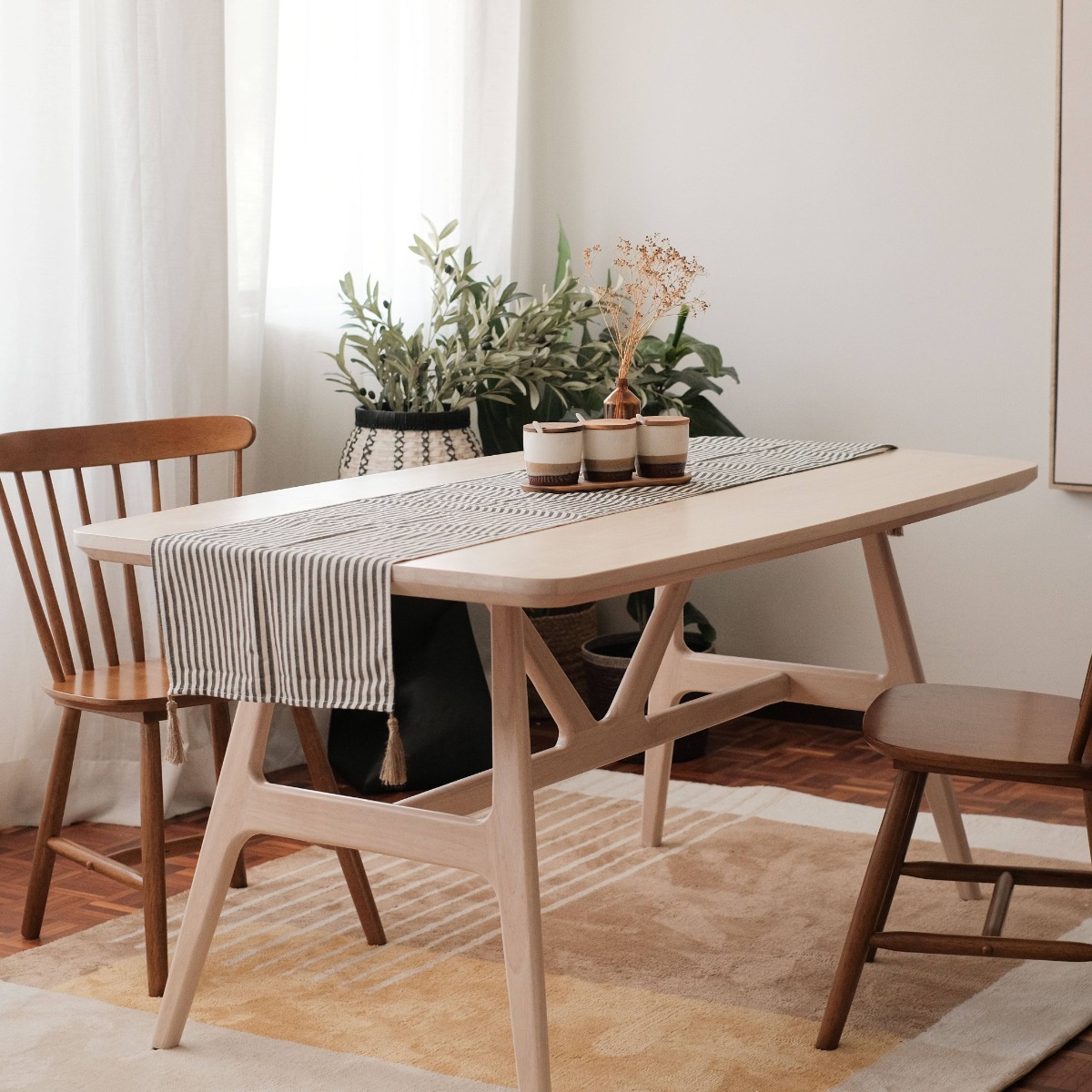
1. Start with the table's shape, size and material
Before choosing accessories, treat the table itself as the foundation of the design. Its form and finish should guide the scale, shape and texture of everything placed around it.
Round dining tables
A round table naturally creates a central focal point. One vase, bowl or compact arrangement often looks more balanced than several items spread around the edge. Keep the centrepiece low or narrow enough for diners to see and speak to one another comfortably.
Rectangular dining tables
A rectangular table can support a longer composition. Try a table runner, a row of small objects or a grouped arrangement that follows the table's length. Leave sufficient empty space at both ends so the setting does not feel crowded.
Oval dining tables
An oval table combines the visual softness of a round table with the length of a rectangular design. Echo its curves with rounded trays, bowls or vases rather than relying only on sharp, angular accessories.
Extendable dining tables
Keep everyday styling compact and portable. Place the main objects on a tray so the arrangement can be lifted away easily when the table is extended for additional guests.
If you are still choosing the main piece, explore Ruma's modern dining tables in Malaysia and compare the dimensions with your room, seating needs and everyday routine.
2. Choose dining chairs that complement the table
Dining chairs do not have to come from an identical set. A modern dining area can feel more layered when the table and chairs share one connecting feature—such as colour, line, material or visual weight—while differing in another.
For example:
-
pair a substantial wooden table with visually lighter chairs;
-
soften a stone-look or glass table with upholstered seating;
-
repeat the colour of the table legs in the chair frame;
-
combine a simple table with chairs that provide texture; or
-
use matching side chairs with contrasting end chairs in a larger room.
Comfort remains essential. Check the seat height against the underside of the table and make sure arms, if present, fit beneath or beside the tabletop as intended. Leave enough room to pull out each chair without obstructing a wall, sideboard or walkway.
Browse dining chairs by shape, finish and upholstery to find a combination that feels coordinated rather than overly matched.
Image direction: Show one modern dining table styled with complementary—not identical—chairs. Suggested alt text: Modern dining table with complementary dining chairs in a Malaysian home.
3. Use lighting to define the dining area
Lighting gives the dining table presence, especially in an open-plan home where the dining and living areas share one room. A pendant or chandelier positioned over the table helps establish a visual zone and creates atmosphere after dark.
Choose a fixture that relates to the table's proportions. A single rounded pendant can echo a round table, while a linear fitting or a row of smaller pendants can suit a longer rectangular table. The light should illuminate the tabletop without blocking views or causing uncomfortable glare.
As a starting point, many dining pendants are positioned roughly 75 to 90 cm above the tabletop, but the right height depends on the fixture, ceiling, room and sightlines. Check the manufacturer's installation guidance and test the position in the actual space before final installation. Electrical work should be completed by a qualified professional.
Warm, layered illumination generally makes meals feel more inviting. Combine the main fitting with ambient lighting from the surrounding room rather than relying on a single harsh source.
4. Build a practical everyday table setting
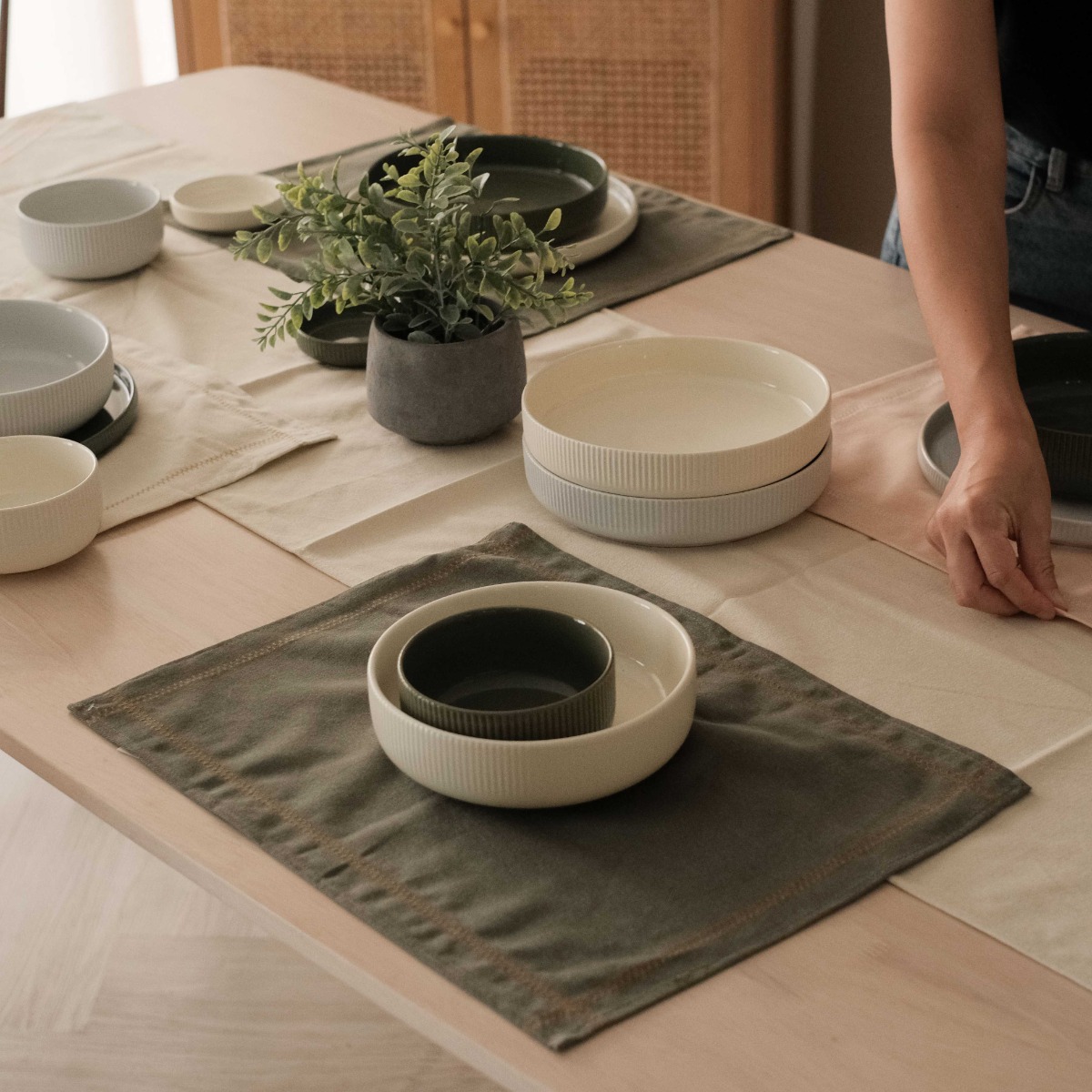
A modern table does not need to remain fully set when it is not in use. For most homes, the best everyday arrangement is simple enough to maintain and quick to clear.
Start with:
-
placemats or a runner that introduces colour or texture;
-
neutral plates and bowls that work across different meals;
-
streamlined cutlery and clear or lightly tinted glassware; and
-
one central object, such as a bowl, vase or tray.
Choose washable, easy-to-store pieces for a table used for meals, work or children's activities. In a compact apartment, a tray can hold the centrepiece and everyday essentials so the entire arrangement moves in one step.
Ruma's table linens and coasters can introduce a new colour or texture without changing the furniture, while coordinated glassware helps complete the setting.
5. Create one clear focal point
A centrepiece gives the eye somewhere to rest, but it should support conversation and serving space. The most effective arrangement is usually either one statement object or a small group treated as one composition.
Modern dining table centrepiece ideas include:
-
a sculptural vase with a few stems;
-
a low bowl filled with fruit;
-
a tray containing two or three objects of different heights;
-
a group of candle holders used when appropriate;
-
a small potted plant; or
-
a seasonal arrangement that can be removed easily.
Keep everyday centrepieces below the main sightline or use a tall, narrow arrangement with visual space around it. Avoid oversized decorations that divide the table or interfere with serving dishes.
For a flexible arrangement, group a vase or pot on a decorative tray. The tray creates a deliberate boundary and makes the display easier to move before a meal.
Image direction: Show three centrepiece options—single vase, low bowl and grouped tray—on the same table. Suggested alt text: Modern dining table centrepiece ideas using a vase, bowl and decorative tray.
6. Work with a restrained colour palette
Modern styling does not have to mean an entirely neutral room. A controlled palette simply makes the arrangement feel cohesive.
Choose one of these approaches:
Tonal neutrals
Layer white, cream, beige, taupe, grey or black through table linen, ceramics and seating. Use texture to prevent the result from feeling flat.
Neutral base with one accent colour
Begin with an understated table and chairs, then introduce one accent through napkins, placemats, glassware, artwork or flowers. Deep green, terracotta, muted blue or burgundy can add character without overwhelming the room.
Natural palette
Combine timber tones with linen, woven fibres, greenery and softly coloured ceramics. This works particularly well in Scandinavian, Japandi and contemporary interiors.
Monochrome contrast
Black-and-white combinations create a crisp look, especially when softened with wood, fabric or plants. Repeat each colour in more than one place so the contrast feels intentional.
When the dining area is visible from the living room, borrow a colour already used nearby. This visually connects the two zones without requiring every object to match.
7. Mix materials without creating visual clutter
A room feels more dimensional when it contains varied surfaces, but too many unrelated finishes can make it look busy. Limit the main composition to two or three prominent materials and repeat them subtly.
Here are some reliable combinations:
| Table finish | Complementary materials | Overall effect |
| Warm wood | Linen, ceramic and clear glass | Relaxed and welcoming |
| Dark wood | Light upholstery, stoneware and brass-toned accents | Refined contrast |
| Marble or stone-look | Wood, glass and restrained metal | Contemporary and balanced |
| Glass | Fabric, ceramic and natural fibres | Softer and less clinical |
| Black or dark finish | Pale timber, neutral linen and greenery | Graphic but approachable |
Use the table's finish as the dominant surface, then let accessories provide contrast. If the tabletop already has strong veining or grain, simpler decorations will allow that feature to remain visible.
8. Style a small dining area without overcrowding it
In many Malaysian condominiums and open-plan homes, the dining area must remain flexible. The aim is not to fit more decoration onto the table; it is to make a small number of choices work harder.
Try these small-space dining ideas:
-
Use one low centrepiece instead of several scattered accessories.
-
Choose chairs with a visually light frame or compact profile.
-
Repeat the living room's colour palette to create continuity.
-
Position a mirror where it can reflect light without causing glare at the table.
-
Keep frequently used tableware in a nearby sideboard rather than on the tabletop.
-
Use a portable tray so the table can quickly become a work or study surface.
-
Leave the table edges clear to preserve usable space.
A sideboard can store serving pieces, table linen and glassware while providing a secondary surface for lamps or decorative objects. Measure the passage between the sideboard and pulled-out chairs before choosing one.
9. Adjust the styling to the tabletop material
How to style a wooden dining table
Allow the grain to remain visible. A short runner or individual placemats can add softness without covering the surface completely. Ceramic tableware, clear glass and linen create an easy contrast with warm wood.
How to style a marble or stone-look dining table
Treat the tabletop as a statement feature. Use fewer accessories with simple silhouettes, and repeat one colour from the veining in the chairs, tableware or surrounding room. Use coasters, placemats and care methods appropriate to the specific surface.
How to style a glass dining table
Introduce texture through upholstered chairs, fabric table linen, stoneware or woven accessories. A cluttered display can look especially busy because objects and chair legs remain visible through the surface, so keep the centre arrangement controlled.
How to style a dark dining table
Create contrast with light ceramics, pale fabric or clear glass. Greenery and warm metallic details can prevent a dark arrangement from feeling overly formal.
Always follow the product's care instructions. Do not assume that solid stone, ceramic, glass, veneer and stone-effect surfaces respond to heat, moisture or cleaning products in the same way.
10. Restyle the table for entertaining and festive occasions
A flexible foundation lets you adapt the table for birthdays, dinner parties and celebrations such as Hari Raya, Chinese New Year or Deepavali without replacing the permanent décor.
Start with the everyday palette, then add temporary layers:
-
introduce a festive colour through napkins, placemats or glassware;
-
place serving dishes at practical intervals;
-
use a lower centrepiece when guests sit across from one another;
-
add warm ambient lighting for evening meals;
-
create visual rhythm by repeating one detail at each place setting; and
-
keep enough open space for shared dishes and comfortable movement.
If the table will hold many serving plates, relocate the centrepiece to a sideboard. A beautiful table is successful only when guests can dine comfortably.
Common modern dining table styling mistakes
Avoid these frequent problems:
-
Using a centrepiece that blocks conversation. Keep it low, narrow or easy to remove.
-
Covering a distinctive tabletop completely. Let attractive wood grain, glass or stone-look finishes remain part of the design.
-
Matching every piece exactly. Repeating one element is usually enough to create cohesion.
-
Ignoring daily routines. Styling should not prevent the table from being used for meals, work or homework.
-
Choosing accessories that are too small. A large table needs either one suitably scaled object or a deliberate group.
-
Adding too many materials and colours. Limit the main palette and repeat finishes around the room.
-
Forgetting chair and walkway clearance. Decorations cannot compensate for an uncomfortable layout.
-
Prioritising appearance over surface care. Use protective pieces and cleaning methods suited to the actual tabletop.
Modern dining table styling checklist
Before finishing the arrangement, ask:
-
Does the centrepiece suit the table's shape and scale?
-
Can diners see and speak across the table?
-
Is there enough room for plates and serving dishes?
-
Do the chairs complement the table and fit comfortably beneath it?
-
Are the main colours repeated elsewhere in the dining area?
-
Have I limited the design to two or three prominent materials?
-
Can the everyday arrangement be cleared quickly?
-
Does the lighting illuminate the table without obstructing views?
-
Are the tabletop and accessories easy to maintain?
-
Does the styling work with the adjoining living space?
Bring your modern dining space together
The most successful modern dining table styling feels intentional but effortless. Begin with the table's dimensions and finish, choose comfortable chairs, create one focal point and add colour through pieces that are easy to change. Above all, leave room for the meals, conversations and celebrations the table is meant to support.
Explore Ruma's collection of modern dining tables in Malaysia and complete the space with dining chairs, table linen, glassware and décor suited to your home.
Frequently asked questions
How do you make a dining table look modern?
Use clean lines, a controlled colour palette and one clear focal point. Combine two or three materials—such as wood, ceramic and glass—and leave part of the tabletop empty. Modern styling should feel edited rather than crowded.
What should you put in the centre of a modern dining table?
A low bowl, sculptural vase, compact plant or small group arranged on a tray can work well. Choose an object that suits the table's shape and does not block conversation or occupy space needed for meals.
Should dining chairs match the dining table?
No. Chairs can complement the table through a shared colour, material, shape or visual weight without being an exact match. The combination should still be correctly proportioned and comfortable to use.
How do you decorate a dining table when it is not in use?
Keep the arrangement simple with one vase, bowl or grouped tray. This gives the table a finished appearance while allowing it to be cleared quickly for meals, work or entertaining.
How do you style a small dining table?
Use one compact, low centrepiece and keep the edges clear. Choose accessories that can be moved together on a tray, and avoid permanent displays that reduce the usable dining surface.
How do you style a wooden dining table?
Let some of the wood grain remain visible and add contrast through linen, ceramics and clear glass. A runner or placemats can introduce softness and colour without covering the whole table.
How do you style a marble dining table?
Use a small number of accessories with simple shapes so the tabletop remains the main feature. Repeat a colour from the veining elsewhere in the setting and use protection and care methods suitable for the specific surface.
What colours work in a modern dining room?
Neutral colours provide a flexible foundation, but modern rooms can also use muted green, blue, terracotta or burgundy as accents. Choose one main accent and repeat it through table linen, artwork, seating or glassware for cohesion.
Reviewed by the RUMA Editorial Team
The RUMA Editorial Team reviews home and furniture content to help readers make clearer buying decisions based on space, function, and everyday living needs.
