
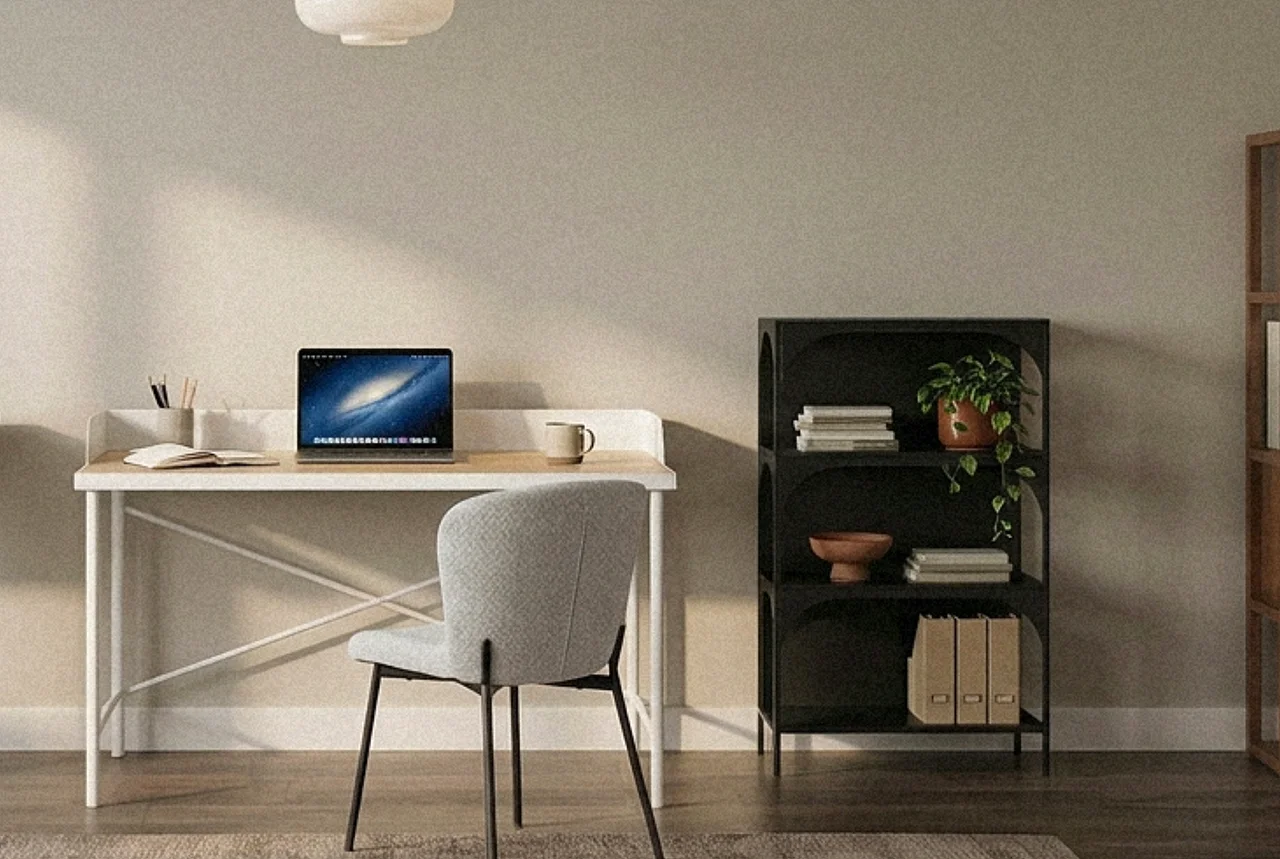
Matching Office Chair Seat Height to Your Home Desk
Key Takeaway
-
The right office chair seat height keeps your thighs level and both feet flat on the floor. To find it, sit down and measure from the floor to the back of your knee.
-
Once your feet are set, check your elbows. If your keyboard sits on the desk, the desktop should be at about elbow height when you sit.
-
If you raise the chair for a tall desk, add a footrest so your feet stay supported. Lowering the desk is the better fix where you can.
-
Leave two to three fingers' width between the front edge of the seat and the back of your knees, so the seat doesn't press behind them.
-
Armrests should sit at elbow height and clear the desk edge, so you can pull the chair in close without leaning forward.
Introduction
If your shoulders feel tight after a day at your home desk, or your legs start to tingle by mid-afternoon, check your chair height first. A chair set too high presses on the backs of your thighs. One set too low leaves your arms reaching up to the keyboard.
This can happen when the desk and chair weren't chosen together. Getting the office chair seat height right takes a two-step check: your feet first, then your elbows. The same check works whether you use a study desk or a dining table.
What Office Chair Seat Height Suits Your Home Desk?
Set the seat so your thighs sit level and both feet rest flat on the floor. This is the recommended position for seated work.
Next, check your desk. If your keyboard sits on the desktop, the desk should be about level with your elbows. A keyboard tray can sit a little lower, about 3 to 5 cm below your elbows.
If your desk is the wrong height for you, you can't get both checks right. A desk that's too tall makes you raise the chair, which lifts your feet off the floor. A desk that's too low leaves your thighs pressing against its underside.
Set the chair for your feet first. If the desk is still too tall, lower it, or add a footrest if it can't be lowered.
How Do You Adjust Your Desk Chair Height Step by Step?
Before you start, set up exactly as you work, including what's on your feet, since shoes or slippers change how high you sit. Then make your desk chair height adjustment in this order:
-
Sit right back in the chair so your lower back touches the backrest.
-
Raise or lower the seat until your thighs are level and both feet rest flat.
-
Check the front of the seat: you should fit two to three fingers between its edge and the back of your knees.
-
Roll in close to the desk and rest your hands on the keyboard with relaxed shoulders.
-
Look at your elbows. If the keyboard sits above them, lower the desk if you can. If not, raise the chair and add a footrest.
Shopping for a new desk? See ruma's guide to picking a desk for your home office.
How Much Seated Desk Clearance Do Your Legs Need?
You need enough space for your thighs to fit under the desk, plus a little room to move. Seated desk clearance is the space between the top of your thighs and the underside of the desk. To check it, roll in until your stomach is about a fist away from the desk edge. If your thighs touch the desk, you can't sit close enough to type comfortably.
A drawer or a table frame under the desktop reduces this space. When you compare desks, check the height under any drawer as well as the overall desk height.
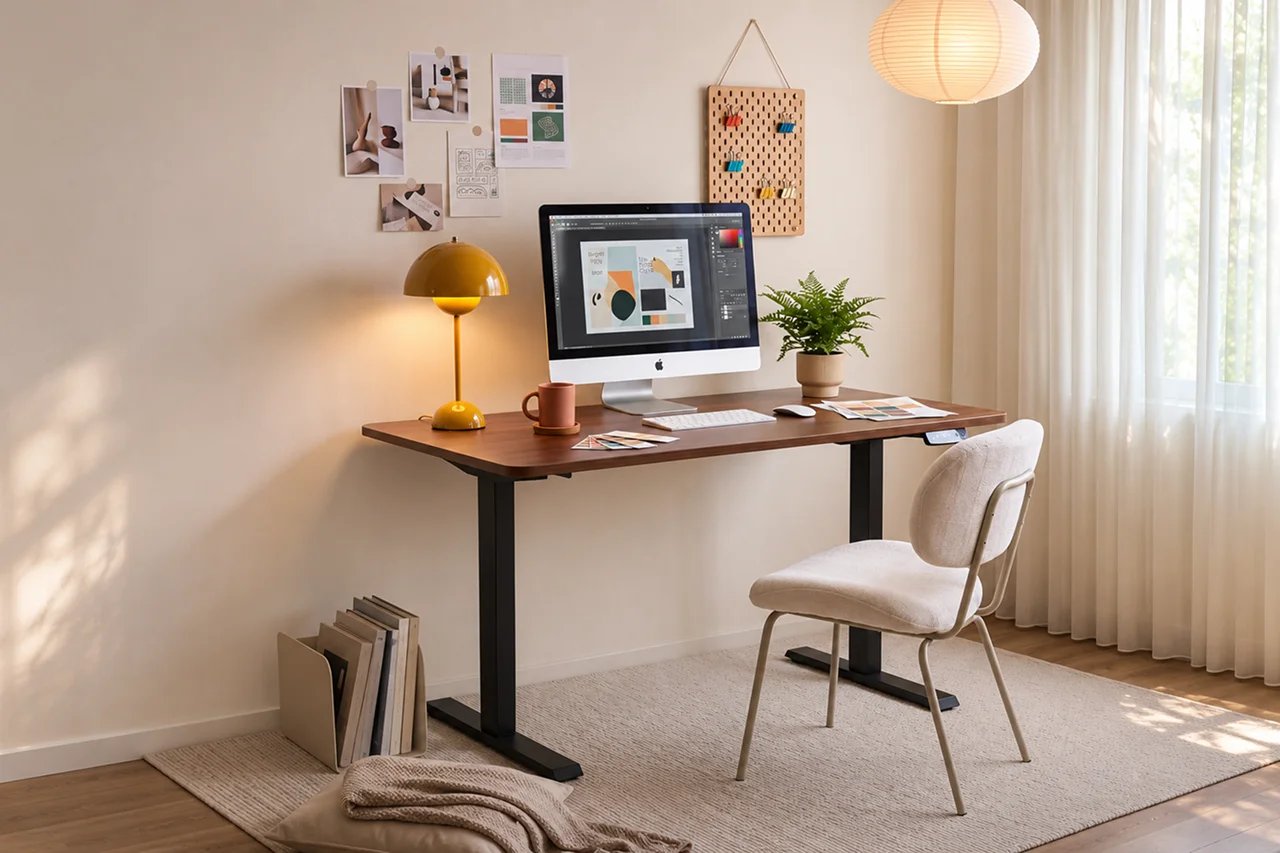
Will Your Chair Armrests Fit Under the Desk?
Your armrests fit if they sit lower than the underside of the desk or stop before its edge. Without enough chair armrest clearance, you end up sitting on the front edge of the seat, leaning towards the screen.
Set armrests at about elbow height, far enough back that you can pull the chair close to the desk. To check chair armrest clearance, measure from the floor to the top of the armrests with the seat at your height. If that number is lower than the underside of the desk, they'll slide under.
If they don't fit, choose an armrest type that avoids the desk edge:
|
Armrest type |
How it helps with clearance |
Suits |
|
Height-adjustable |
Lowers to slide under the desk edge |
Desks with a thin top and no drawer |
|
Flip-up |
Folds out of the way when you type |
Low desks and dining tables |
|
Short or set-back |
Stops before the desk edge |
Typing close to the desk |
|
Armless |
Nothing to catch on the desk |
Tight spaces and shared desks |
Another option is to rest your forearms on the desktop while you type.
Measure the underside of your desk, not just its top, because drawers and frames decide whether your legs and armrests fit.
What Signs Show Your Chair and Desk Heights Don't Match?
Use this table to match what you feel to what needs changing:
|
What you notice |
Likely cause |
What to try |
|
Pressure under your thighs |
Seat too high |
Lower the seat, then recheck your elbows |
|
Shoulders lift when you type |
Desk too high for your chair |
Lower the desk, or raise the chair and add a footrest |
|
Pressure behind your knees |
Seat too deep for your legs |
Use a cushion behind your back or a shallower seat |
|
Leaning forward to reach |
Armrests hitting the desk |
Lower, flip up, or remove the armrests |
Change one thing at a time and give it a full workday before adjusting again.
Can Small Changes Make Your Home Desk More Comfortable?
Once the heights are right, a few small changes make the desk a place you're happy to sit. If the desk is near a window, turn it so the light comes from the side. Light from behind the screen makes you squint, and light from behind you shows up as glare on the screen.
Keep the things you reach for during the day, like your phone, a notebook, or a drink, within arm's reach so you don't twist or stretch. In Malaysia's warm, humid weather, a mesh or fabric seat stays cooler to sit on than leather or vinyl. And if the desk sits in your bedroom or living area, a chair in wood tones or a soft fabric blends in better with the rest of the room.
How High Should Your Office Chair Seat Be?
Set your office chair seat height so your thighs are level and your feet rest flat on the floor. Then check that the desk holding your keyboard sits at about elbow height. If the desk is too tall and can't be lowered, raise the chair and add a footrest. Make sure your legs and armrests fit under the desk.
Frequently Asked Questions
1. Can I use a dining table as my home office desk?
Yes, if the tabletop sits at about your elbow height and your thighs still fit under the table frame. Measure the gap under the frame, not just the tabletop, since the frame sits lower.
2. Is a footrest a good fix for a desk that's too high?
It works, but treat it as a last resort. Try lowering the desk first. If you do use one, shift your position now and then, since your feet stay in one spot.
3. How do I find the office chair seat height I need before buying?
Sit with your thighs level and your feet flat, then measure from the floor to the back of your knee. That number is roughly your ideal seat height. Check that it falls between the lowest and highest seat height listed on the product page.
4. Do I need an office chair with armrests?
Not necessarily. Armrests are for resting on now and then, not leaning on all day. If you work at a low desk or a dining table, an armless or flip-up design avoids clearance problems.
5. How do I set up one chair for two people who share a desk?
Each person should do a quick desk chair height adjustment every time they sit down: feet first, then elbows. A chair with an easy-to-reach height lever helps. The shorter person may also need a footrest if the desk stays at the taller person's height.
Matching your office chair seat height to your home desk starts with your feet: thighs level, feet flat, and a little space behind your knees. Next, check that your keyboard sits at about elbow height, and add a footrest only if you can't lower the desk. Then measure under the desk, so your thighs and armrests slide in without catching. If your current desk is too tall for your chair, browse ruma's home office desks, including height-adjustable ones.
Reviewed by the RUMA Editorial Team
The RUMA Editorial Team reviews home and furniture content to help readers make clearer buying decisions based on space, function, and everyday living needs.
