

Last Updated: 20 August 2026
Best Pet-Friendly Rug Materials: A Practical Guide for Malaysian Homes
Polyester is the rug material most relevant to pet owners shopping Ruma's current collection. Ruma's tufted microfibre rugs are made from 100% polyester, and the range also includes printed polyester, silky polyester and shaggy polyester designs.
However, material alone does not make a rug pet-friendly. Pile height, surface construction, fringe, backing, colour and cleaning instructions all affect how well a rug works around cats or dogs. In general, a shorter, denser surface without loose loops or fringe will be easier to vacuum and less likely to catch claws than a deep shaggy rug.
This guide explains the rug materials and constructions currently available at Ruma, what to check before buying and how to choose a practical rug for a pet-friendly Malaysian home.
Ruma's current rug materials and constructions at a glance
| Rug type in Ruma's collection | Listed material or construction | Pet-home considerations | Best suited to |
|---|---|---|---|
| Tufted microfibre rug | 100% polyester with canvas backing on reviewed products | Soft surface; vacuuming effort depends on pile depth and density | Comfort-focused living rooms and bedrooms |
| Printed soft polyester rug | Polyester | Pattern may help disguise minor marks; confirm pile and care instructions | Living and dining areas |
| Printed silky polyester rug | Polyester | Smooth appearance; check surface texture and maintenance guidance | Moderate-traffic rooms |
| Polyester shaggy rug with fringe | Polyester | Deep pile can hold more fur and debris; fringe may attract chewing or pawing | Lower-traffic, lower-risk rooms |
| Chenille rug | Chenille construction; underlying fibre not specified on reviewed page | Performance depends on the actual fibre, weave and care method | Use only after checking full composition |
| Reversible rug | PVC on the reviewed product page | Different from a textile pile rug; check grip, placement and cleaning guidance | Spaces suited to the manufacturer's stated use |
Quick recommendation: Within Ruma's current range, begin with polyester or polyester microfibre. Then choose the shortest, densest surface that suits your room, avoid loose fringe if your pet plays with textiles and verify the product's care instructions before purchase.
Why rugs can be useful in homes with pets
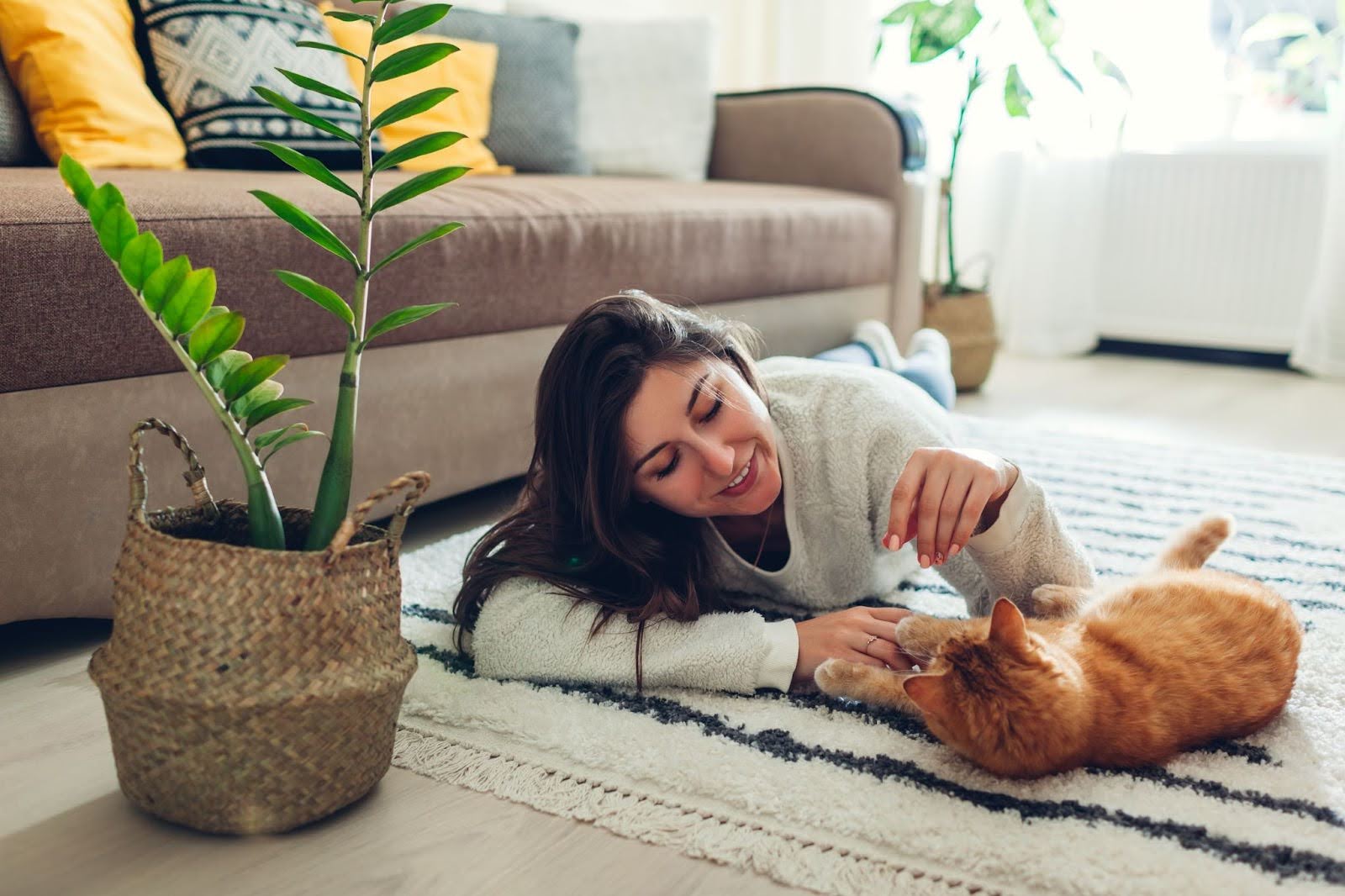
A thoughtfully selected rug can make a shared room more comfortable and practical.
-
Added grip: A rug can provide traction on smooth tile or timber flooring.
-
Floor protection: It forms a barrier between claws, dirt, minor spills and the flooring below.
-
Comfort: The softer surface creates a warm resting place for cats and dogs.
-
Reduced noise: Rugs help soften the sound of paws, toys and movement.
-
Defined areas: An area rug can identify a pet's resting or play zone without adding a physical divider.
-
Flexible styling: A removable rug is easier to reposition or replace than permanent floor covering.
These benefits depend on safe placement. The rug should lie flat without curled edges, and a suitable rug pad should be used if the rug moves when a pet runs across it.
What makes a rug pet-friendly?
A pet-friendly rug should suit the animal's habits, the room and the owner's maintenance routine. Consider the complete product rather than relying on one material claim.
Fibre composition
Fibre influences texture, colour retention, stain response and cleaning requirements. Polyester is the main confirmed textile fibre in Ruma's current rug collection. Ruma's reviewed tufted microfibre products list 100% polyester, showing that “microfibre” describes the very fine fibre format rather than a separate raw material in these rugs.
Pile height and density
Pile is the visible fibre surface. Shorter pile generally keeps fur and crumbs closer to the surface, where they are easier to see and vacuum. Deep or shaggy pile provides a softer feel but can hold more hair and debris.
Density also matters. A dense surface may keep debris from settling deeply, while a loose construction can be harder to maintain. If pile height and density are not provided online, inspect the rug in store or confirm the specifications before purchase.
Loops, fringe and edges
Large or loose loops can catch claws. Fringe may invite chewing, scratching or pawing. For pets that regularly play with textiles, a short cut pile or firmly constructed surface without fringe is usually the more practical choice.
Backing and grip
Backing affects how the rug sits on the floor and how it should be cleaned. Reviewed Ruma microfibre rugs such as the Cloudy and Lavis designs use canvas backing. If a rug moves on the flooring below, add a compatible non-slip pad sized slightly smaller than the rug.
Colour and pattern
A pet-friendly rug does not have to be dark. Mid-tone colours, heathered surfaces and small or irregular patterns can make shed fur and minor marks less obvious between cleanings. Choosing a tone close to your pet's coat may also help.
Care instructions
Do not assume a polyester or microfibre rug is machine-washable, waterproof or stain-proof. Those claims must be confirmed for the finished product, including its backing. Follow the product label for vacuuming, spot cleaning, wet cleaning and professional care.
Is polyester a good rug material for pets?
Polyester can be a practical rug fibre for homes with cats and dogs. It offers good colour clarity and colourfastness and resists many water-soluble stains. It can also be made into different surfaces, including microfibre, printed and shaggy rugs.
The construction determines how convenient the finished rug will be. A shorter polyester surface is generally easier to vacuum than a deep polyester shag, even though both use the same basic fibre. Backing, dye method and manufacturer-approved cleaning processes can also differ.
Polyester may be less resilient than nylon under intense, repeated traffic, so rug placement still matters. Rotate the rug periodically where practical and use furniture protectors if recommended.
Choose polyester when: you want a soft, colourful rug from Ruma's current range and can select a construction suited to your pet's habits.
Check before buying: pile height, density, fringe, backing, cleaning directions and placement restrictions.
Are microfibre rugs suitable for pet-friendly homes?
Microfibre rugs use very fine fibres to create a soft surface. The reviewed Cloudy Tufted Microfiber Rug and Lavis Tufted Microfiber Rug are both listed as 100% polyester with canvas backing.
This means their fibre-level characteristics are those of polyester, while their everyday performance also depends on the tufting, pile depth and density. A microfibre rug may feel comfortable under paws, but very fine fibres can still hold fur if the pile is deep. Check whether your vacuum and its recommended setting are suitable for the rug.
Choose microfibre when: softness is a priority and the rug's pile and care requirements suit your cleaning routine.
Check before buying: exact fibre composition, pile height, backing and vacuuming guidance.
Are printed polyester rugs good for homes with pets?
Printed polyester rugs are highly relevant to Ruma's current selection. The Sofea Printed Soft Polyester Rug, for example, lists polyester as its material.
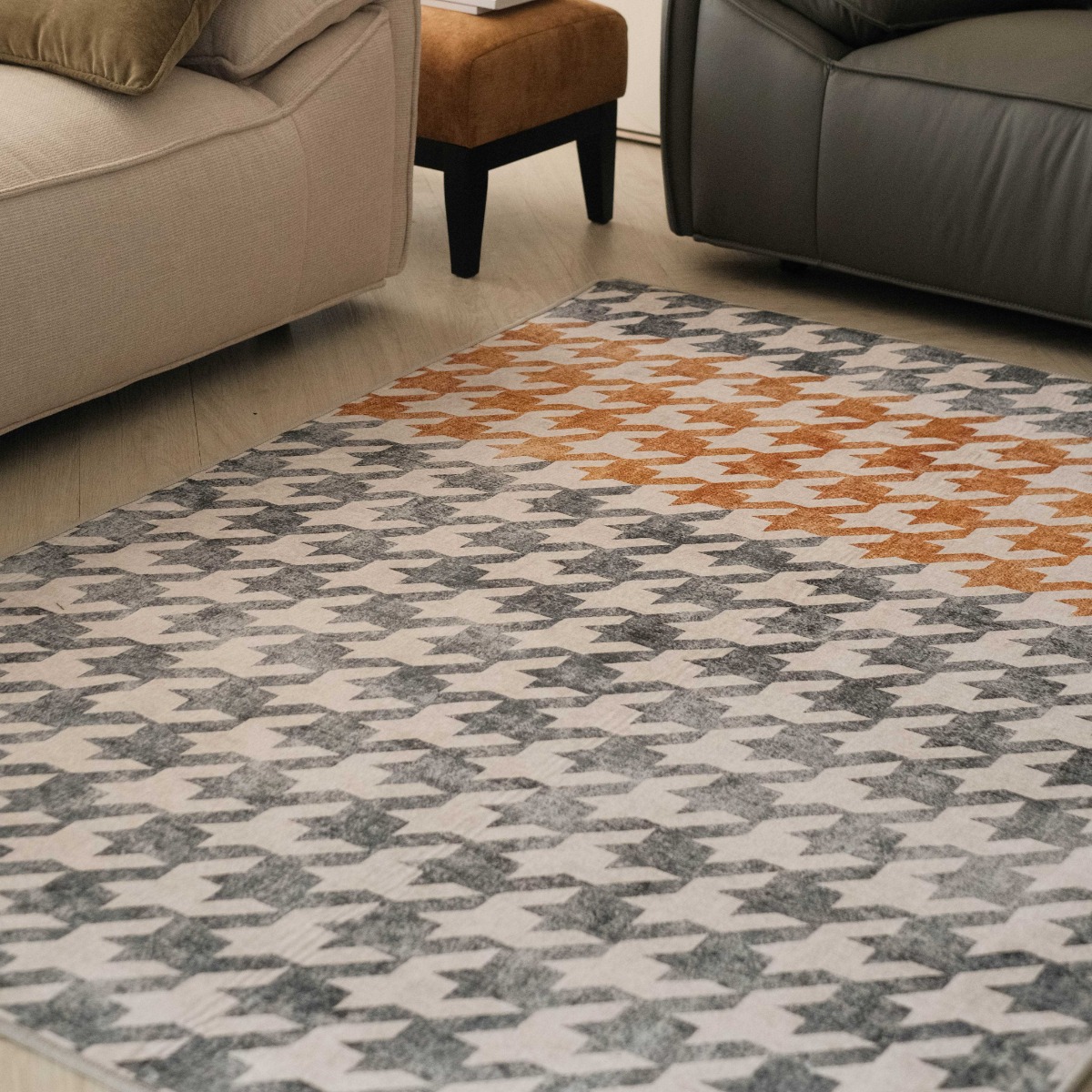
A multi-tone print can make minor marks or contrasting strands of fur less noticeable than a plain, solid surface. Pattern does not make the rug stain-proof, but it can help the room look presentable between routine cleanings.
Compare the surface height and texture before choosing. Printed rugs with a shorter profile will generally be easier to vacuum than a shaggy design, but the exact specification and care label should guide the final decision.
Choose printed polyester when: you want colour and pattern with a surface that fits your normal maintenance routine.
Check before buying: pile profile, pattern scale, approved cleaning method and whether the colours suit your pet's coat.
What about silky polyester rugs?
Ruma also offers printed polyester rugs described as silky. This describes the look or hand-feel rather than a different raw fibre. These designs can provide a smoother, more decorative finish, but the surface should be assessed against the pet's behaviour.
If a cat scratches rugs or a dog frequently runs through the room, inspect how tightly the surface is constructed and whether it shows pressure or movement. Follow the product's vacuuming and cleaning directions to protect the finish.
Choose silky polyester when: the decorative finish is important and the room has moderate, predictable use.
Check before buying: surface texture, pile direction, care label and suitability for the intended traffic level.
Should pet owners choose a shaggy polyester rug?
A polyester shaggy rug can feel plush, but it is usually less convenient in a home with heavy shedding, muddy paws or frequent crumbs. The longer pile provides more space for hair and debris to settle, while fringe can attract pets that chew or paw textiles.
This does not mean a shaggy rug is unsuitable for every pet owner. It may work in a quiet bedroom with a low-shedding pet and a consistent cleaning routine. It is less practical beside an entrance, dining table, feeding area or main pet route.
Ruma's Zoe Polyester Shaggy Rug with Fringe should therefore be presented as a comfort-led option with greater maintenance needs—not as the easiest pet-friendly choice.
Choose shaggy polyester when: softness matters more than minimum maintenance and the placement is relatively low risk.
Check before buying: pile depth, fringe, vacuum compatibility and cleaning requirements.
Are chenille rugs pet-friendly?
Chenille describes a soft yarn or surface construction; it does not identify the underlying fibre by itself. The reviewed Greyson Houndstooth Chenille Rug page lists “chenille” but does not state whether the fibre is polyester, cotton or a blend.
Before recommending a chenille rug specifically for pets, confirm the complete fibre composition, weave, backing and approved care method. The houndstooth pattern may help disguise minor visual marks, but it does not establish stain resistance or washability.
Choose chenille when: the complete composition and construction have been confirmed and suit the pet's habits.
Check before buying: underlying fibre, loop structure, backing and care instructions.
How is a PVC reversible rug different?
PVC is not a textile rug fibre. Ruma's Aki Modern Reversible Rug is listed as polyvinyl chloride, so it should be compared by surface grip, placement, edge design and manufacturer-approved cleaning rather than by textile pile.
Confirm that the product is suitable for the intended floor and room. A reversible design may offer styling flexibility, but claims about pet safety, water resistance or cleaning should only be made when supported by the product specification.
Choose a PVC rug when: its stated use, feel and care requirements match the intended room.
Check before buying: grip, floor compatibility, edge stability, odour or ventilation instructions and cleaning guidance.
What about polypropylene, nylon, wool and natural-fibre rugs?
These materials are common in the wider rug market but were not visible in Ruma's current online rug assortment at the time of this review. They can be mentioned briefly for educational context without implying that Ruma currently sells them.
| Material in the wider market | General characteristic | Important limitation |
| Polypropylene or olefin | Resists moisture and many stains | May flatten under heavy use |
| Nylon | Durable, resilient and abrasion-resistant | Often more expensive than polyester |
| Wool | Durable, resilient and comfortable | Usually needs more careful cleaning |
| Cotton | Some small rugs are washable | Can absorb liquid and wear faster |
| Seagrass, jute or sisal | Natural texture and firm construction | Cleaning flexibility and moisture tolerance vary |
If Ruma introduces these fibres later, update the article with verified product examples and care information before linking them to pet-friendly claims.
How to choose a pet-friendly rug from Ruma
1. Begin with your pet's habits
Consider shedding, scratching, chewing, muddy paws, water drips and the likelihood of accidents. A cat that claws textiles requires a different surface from an older dog that mainly needs added grip.
2. Choose the right polyester construction
Decide whether a tufted microfibre, printed, silky or shaggy surface fits your maintenance routine. For easier fur removal, prioritise the shortest, densest option available after checking its specification.
3. Avoid tempting details where necessary
If the pet paws, scratches or chews textiles, avoid loose loops and fringe. Check that the edges sit flat and cannot easily be pulled.
4. Select a forgiving colour or pattern
Choose a mid-tone or patterned rug that complements the room and does not strongly contrast with the pet's coat. Pattern helps with visual maintenance but should not replace regular cleaning.
5. Read the complete product information
Confirm fibre composition, backing, dimensions and cleaning instructions. If a specification is missing, contact Ruma before describing the rug as washable, stain-resistant, waterproof or designed for pets.
How to keep a rug clean in a home with pets
-
Vacuum regularly using a setting suitable for the rug's pile and construction.
-
Blot fresh liquid promptly with a clean, colourfast cloth instead of rubbing it into the fibres.
-
Use only cleaning products and methods approved by the rug manufacturer.
-
Test any approved cleaner on a hidden area first.
-
Rotate the rug periodically to distribute wear and light exposure.
-
Place a washable mat near entrances and feeding zones to intercept dirt and water.
-
Arrange professional cleaning where required by the care label.
For pet accidents, follow the rug manufacturer's instructions and the cleaning product label. Keep pets away from the treated area until all use, rinsing, ventilation and drying directions have been completed.
Frequently asked questions
What is the best rug material for pet owners shopping at Ruma?
Polyester is the main confirmed textile fibre in Ruma's current rug collection. Options include tufted polyester microfibre, printed polyester, silky polyester and shaggy polyester. For easier upkeep, compare their pile, density, fringe, backing and care instructions rather than choosing by fibre alone.
Is microfibre a different material from polyester?
Microfibre describes very fine fibres rather than one raw material. The reviewed Ruma Cloudy and Lavis tufted microfibre rugs are made from 100% polyester with canvas backing. Other products should still be checked individually.
What type of rug traps less pet hair?
A shorter, denser pile or flat surface generally traps less visible hair than a deep shaggy rug and is easier to vacuum. Exact performance depends on the construction and the vacuuming method recommended for the product.
Are printed polyester rugs suitable for dogs and cats?
Printed polyester rugs can suit homes with dogs or cats when their pile and care requirements match the household. Multi-tone patterns may make fur and minor marks less obvious, but they do not make a rug stain-proof or washable.
Is a shaggy rug suitable for pets?
A shaggy rug can work in a low-risk room, but its deep pile can hold more fur, crumbs and debris. Fringe may also attract chewing or pawing. It is usually less convenient than a shorter surface for heavily shedding or highly active pets.
Can cats damage looped or fringed rugs?
Cats can catch and pull loose loops or fringe while scratching, stretching or playing. A firmly constructed surface without loose decorative details is generally more practical for cats that claw textiles.
Can I call a polyester rug stain-resistant or machine-washable?
Only when the finished product's specifications state that property. Fibre-level characteristics do not automatically apply to the complete rug and its backing. Use the exact care and performance claims provided for each product.
Find a rug that suits your home and your pet
For Ruma shoppers, polyester is the most relevant starting point—but the best choice depends on construction. Compare tufted microfibre, printed, silky and shaggy polyester rugs based on pile, density, fringe, backing, colour and cleaning guidance.
Choose a surface that fits your pet's behaviour and your normal cleaning routine, then confirm the product details before purchase. Explore Ruma's rugs in Malaysia, compare the wider rugs and mats collection, or read our guide to choosing a dining room rug.
Reviewed by the RUMA Editorial Team
The RUMA Editorial Team reviews home and furniture content to help readers make clearer buying decisions based on space, function and everyday living needs.
