
Last Updated: 15 September 2026
A rug can completely change how a room feels. It can make a living room look more connected, bring warmth to a bedroom, define different zones in an open-plan home and add colour without requiring a full makeover.
However, choosing the right rug involves more than finding a pattern you like. Size, placement, material, pile and your household’s daily routine all affect whether a rug looks good and works well in your space.
For most Malaysian homes, the best rug is one that is large enough to connect the surrounding furniture, practical enough for everyday use and suitable for the room in which it will be placed.
This guide explains how to choose the right rugs for your living room, dining room, bedroom and other areas of your home.
Rug buying guide at a glance
If you need a quick answer, start here:
| Room or situation | What to look for | Practical starting size |
|---|---|---|
| Compact living room | A rug that reaches beneath the sofa’s front legs | 160 × 230 cm |
| Standard living room | A rug that connects the sofa, coffee table and chairs | 190 × 290 cm or 200 × 300 cm |
| Large living room | A generously sized rug that anchors the full seating arrangement | 240 × 350 cm or larger |
| Dining room | A low-pile rug with enough room for pulled-out chairs | Measure the dining table and add approximately 60–75 cm on every side |
| Queen bedroom | A rug placed beneath the lower portion of the bed | Around 200 × 290 cm, depending on placement |
| King bedroom | A rug that extends beyond both sides and the foot of the bed | Around 240 × 350 cm or larger |
| Reading corner | A small rug that defines the chair and side-table area | 130 × 190 cm or 140 × 200 cm |
| Hallway or bedside | A narrow rug or floor runner | Approximately 70 × 140 cm |
These are useful starting points rather than fixed rules. Always measure your furniture arrangement and available floor area before ordering.
What should you consider when choosing a rug?
The five most important considerations are:
-
Room: Where will the rug be placed?
-
Size: Which pieces of furniture should the rug connect?
-
Material: How much foot traffic, moisture and potential mess will it face?
-
Pile: Do you prioritise softness or easier maintenance?
-
Style: Should the rug blend into the room or become its main feature?
Start with practical requirements before choosing colours and patterns. A beautiful rug that is too small or difficult to maintain may not deliver the result you want.
How to choose the right rug size
One of the most common rug mistakes is choosing a rug based only on the amount of empty floor visible in the room.
A rug should relate to the furniture around it. If it sits alone in the centre without touching or visually connecting to anything, it can make the room feel smaller and less cohesive.
Before buying a rug:
-
Measure the length and width of the furniture arrangement, not only the room.
-
Mark the proposed rug edges on the floor with masking tape.
-
Check whether doors, storage drawers and moving chairs can still open comfortably.
-
View the taped outline from the room entrance.
-
Choose the larger size when you are deciding between two suitable options and the room allows it.
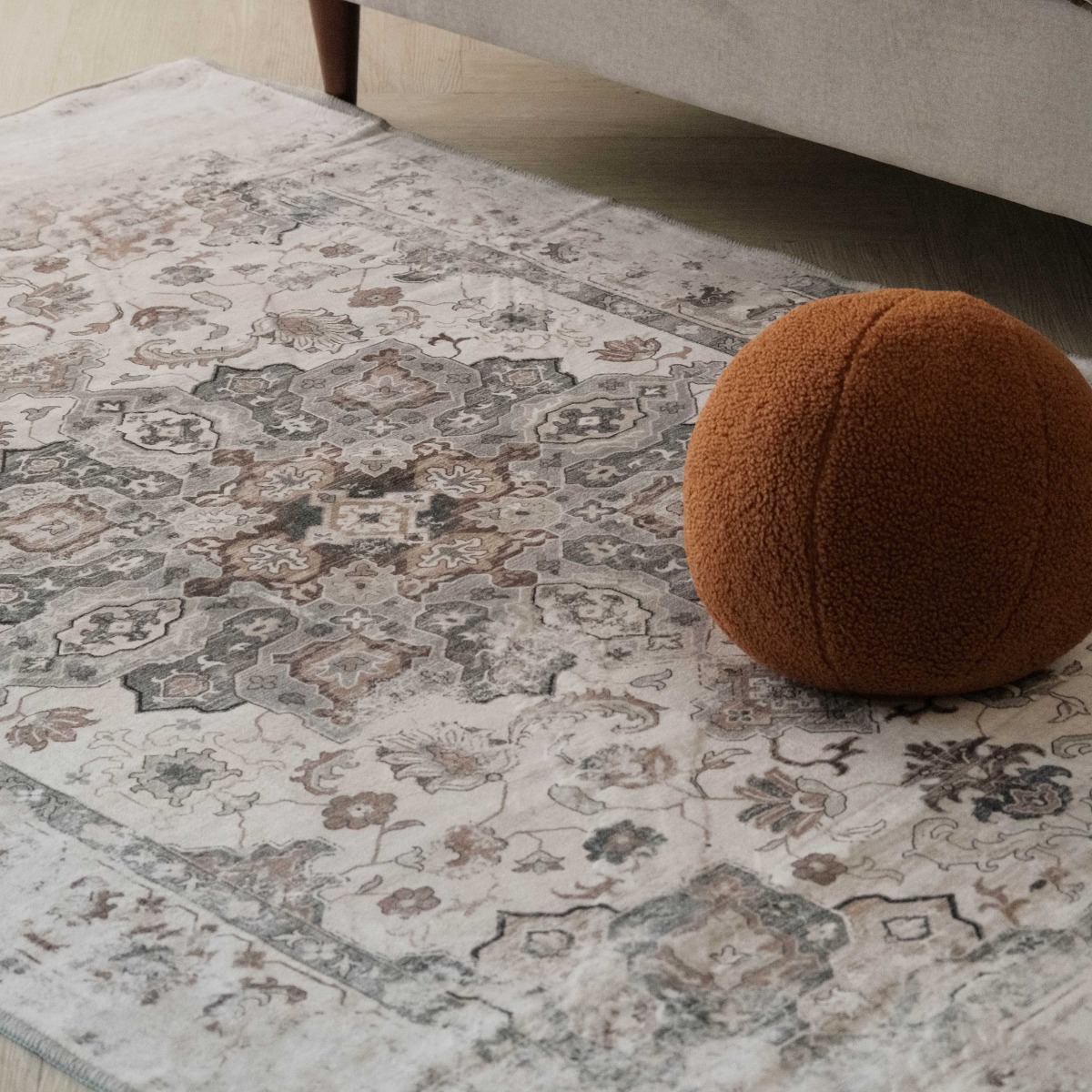
Here is how commonly available rug sizes can work around the home:
| Rug size | Suitable applications |
|---|---|
| 130 × 190 cm | Reading corner, small bedroom or compact accent area |
| 140 × 200 cm | Small seating area, study corner or beside a bed |
| 160 × 230 cm | Compact living room, two-seater sofa arrangement or bedroom |
| 190 × 290 cm | Standard living room or medium-sized dining arrangement |
| 200 × 290 cm / 200 × 300 cm | Three-seater sofa arrangement, bedroom or dining room |
| 240 × 350 cm / 250 × 350 cm | Large living room, large dining arrangement or spacious bedroom |
| 270 × 400 cm | Open-plan area or large furniture grouping |
Choosing a rug for the living room
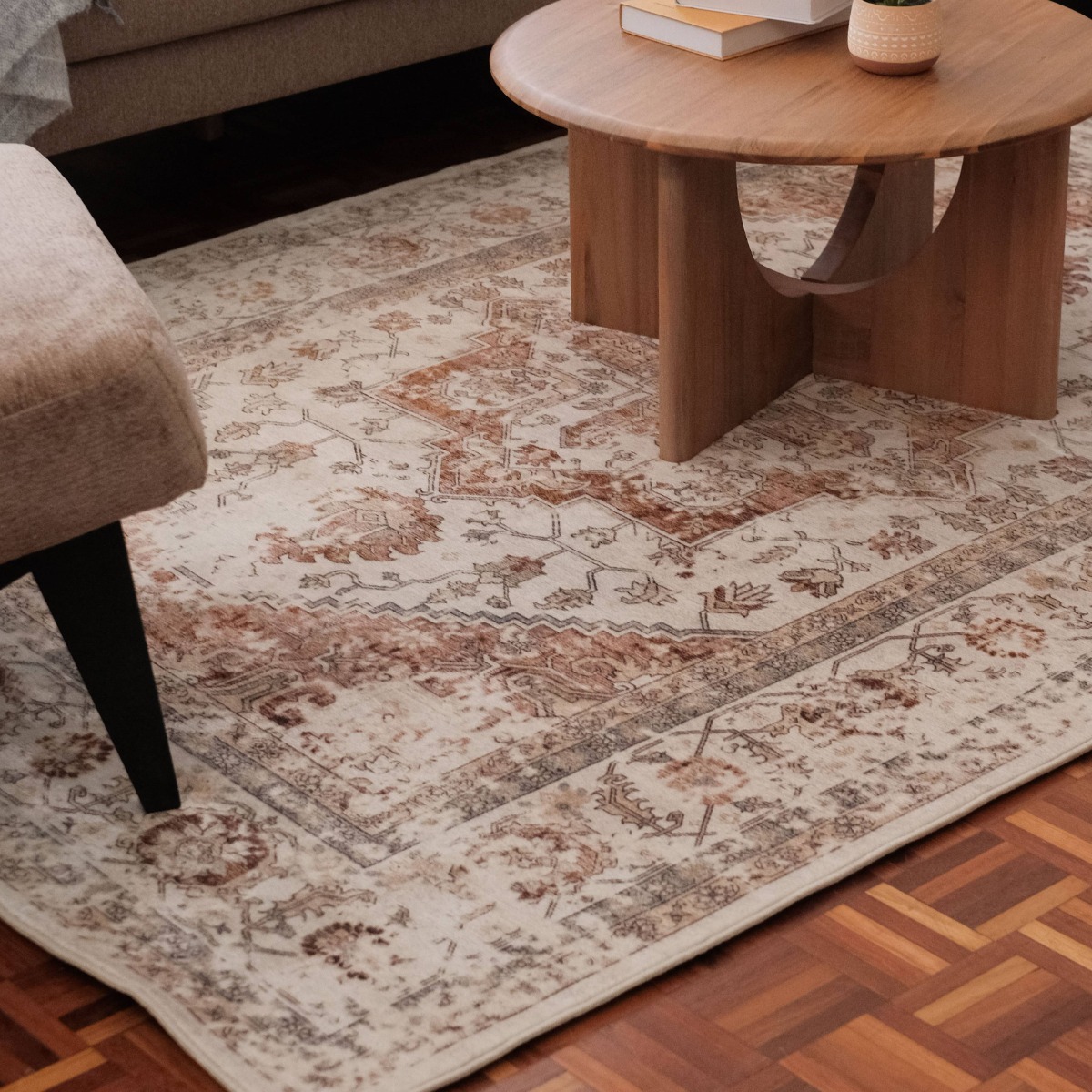
A living room rug should connect the main pieces in the seating area. In most homes, this includes the sofa, coffee table and any lounge chairs.
For compact living rooms
Place at least the front legs of the sofa on the rug. The rug should ideally be as wide as the sofa or extend slightly beyond it.
A 160 × 230 cm rug may work with a compact two-seater or smaller three-seater sofa, depending on the layout. Avoid placing a small rug beneath only the coffee table when the surrounding furniture sits far beyond its edges.
For standard living rooms
A 190 × 290 cm or 200 × 300 cm rug gives you more room to connect a three-seater sofa, coffee table and lounge chair.
Try to maintain a similar amount of visible rug on both sides of the sofa. This makes the arrangement look balanced rather than accidental.
For large or open-plan living rooms
Use a 240 × 350 cm rug or larger to anchor the full seating area. All the furniture legs can sit on the rug in a spacious room, although placing only the front legs on it can also create a well-connected arrangement.
In an open-plan home, a rug can visually separate the living area from the dining area without adding walls or partitions.
Choosing a rug for the dining room
A dining room rug should remain beneath the chairs even when someone pulls them away from the table.
As a practical rule, measure the tabletop and add approximately 60–75 cm around every side. This gives the chairs room to move without repeatedly catching on the rug’s edge.
For dining spaces, consider:
-
A low-pile or relatively flat surface
-
A material that can be vacuumed and spot-cleaned easily
-
A pattern or mid-tone colour that is forgiving of small spills
-
A rug shape that complements the dining table
-
A rug pad to reduce movement on smooth flooring
A rectangular rug is the simplest choice beneath a rectangular dining table. A round rug can complement a round table, provided it is large enough to accommodate all the chairs when they are pulled out.
For more room-specific advice, read ruma’s guide to selecting a rug for your dining room.
Choosing a rug for the bedroom
Bedroom rugs make tiled or hard flooring feel warmer and more comfortable underfoot. They can also frame the bed and make the room feel more complete.
There are three common arrangements:
One large rug beneath the bed
Position the rug beneath the lower two-thirds of the bed so that it extends beyond both sides and the foot. A rug of around 200 × 290 cm can suit some queen-bed arrangements, while a king bed will generally require a larger size.
Measure the bed frame—not only the mattress—before choosing.
Two smaller rugs beside the bed
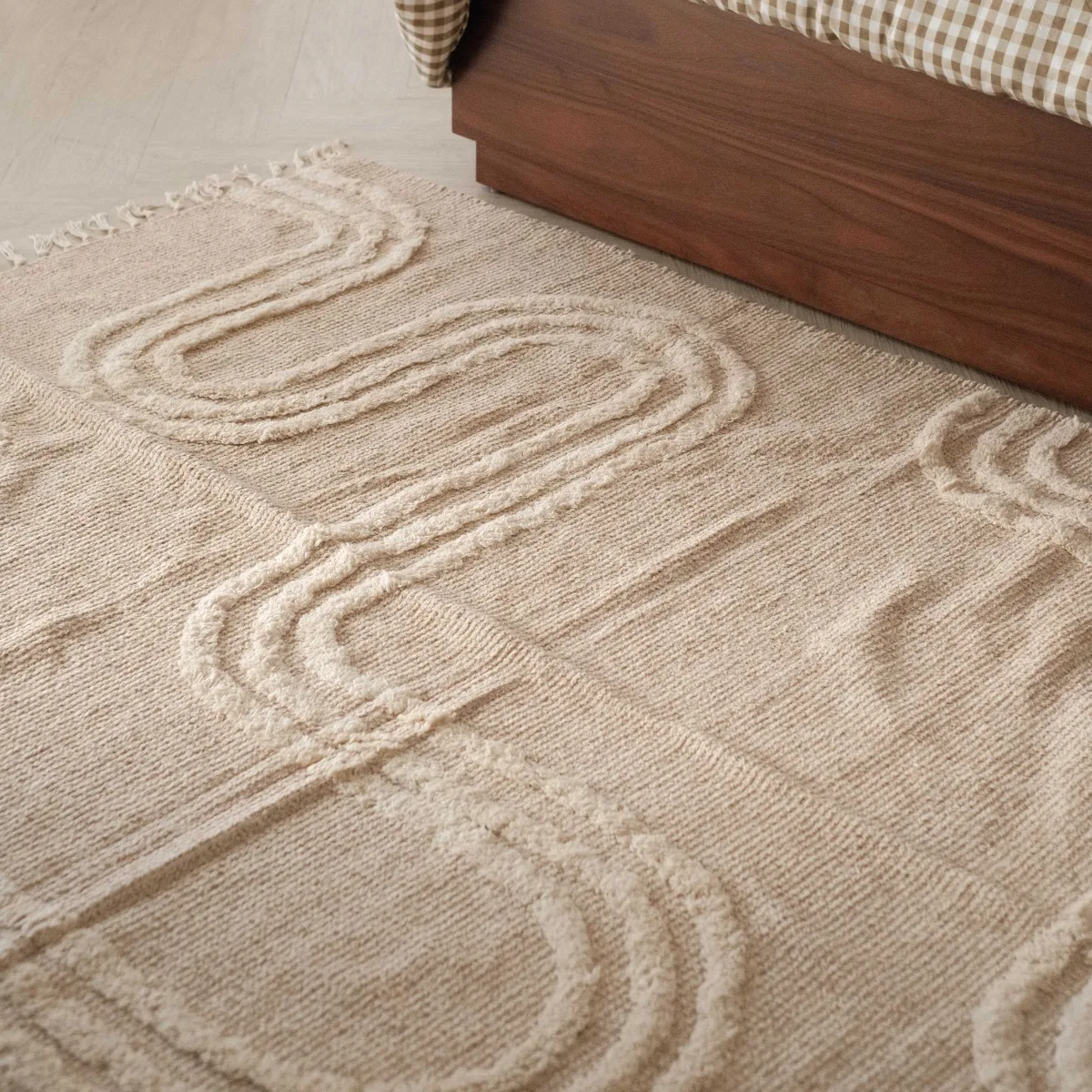
This is a practical option for compact bedrooms or beds with storage drawers. Place one small rug or runner on each side to add softness without covering the entire floor.
One rug at the foot of the bed
A rug placed at the foot of the bed can add colour and texture, particularly when paired with a storage bench. Make sure it is wide enough to relate visually to the bed rather than appearing isolated.
Choosing rugs for small homes and condos
In a smaller Malaysian home, the instinct may be to choose the smallest rug possible. However, a rug that is too small can divide the room into disconnected pieces and make the layout feel more crowded.
Instead:
-
Choose a rug that connects the main furniture group.
-
Keep some exposed floor around the rug to preserve visual space.
-
Use lighter or mid-tone colours if you want an airier appearance.
-
Consider subtle patterns that add depth without overwhelming the room.
-
Use one appropriately sized rug instead of several unrelated small rugs.
-
Position the rug in the same direction as the room or furniture arrangement.
In a combined living-and-dining space, use separate rugs only when there is enough visible flooring between them. This helps each rug define its own zone.
Which rug material is best for your home?
There is no single best material for every household. The right choice depends on the room, expected foot traffic and how much maintenance you are comfortable with.
Polyester rugs
Polyester rugs are available in many colours, patterns and textures. They can provide a soft feel and are a versatile choice for living rooms and bedrooms.
Always check the individual care instructions before cleaning, as construction and backing materials can differ between products.
Microfibre rugs
Tufted microfibre rugs offer a soft, comfortable surface and can add a cosy feeling to living rooms and bedrooms. Vacuuming regularly helps prevent dust and loose debris from settling between the fibres.
If you have pets, check whether the rug’s pile and construction are suitable for their claws and shedding habits.
Chenille rugs
Chenille provides noticeable texture and can give a room a more layered, refined appearance. It works particularly well when you want a rug to add visual interest without relying on a bold colour.
Follow the product’s care label closely, especially when treating spills.
Cotton rugs and runners
Cotton is often used for smaller floor mats and runners. These pieces can work well beside beds, along hallways or in transitional areas.
Some cotton rugs may be washable, but washing instructions vary. Always refer to the care label rather than assuming that every cotton rug can be machine-washed.
Should you choose a low-pile or high-pile rug?
Pile refers to the height and density of the rug’s fibres.
Low-pile rugs
Low-pile rugs generally work well in:
-
Dining rooms
-
Entryways
-
Home offices
-
Homes with children
-
High-traffic areas
-
Spaces where furniture needs to move easily
Their shorter surface typically makes loose crumbs and visible debris easier to reach during cleaning.
Higher-pile or tufted rugs
Softer, tufted rugs are suitable for:
-
Bedrooms
-
Relaxed living rooms
-
Reading corners
-
Areas where comfort is the priority
They can feel cosier underfoot but may require more thorough vacuuming.
If a door must open over the rug, measure the available clearance before selecting a thicker design.
How to select the right rug colour and pattern
Your rug does not need to match your sofa exactly. In fact, using slightly different tones often produces a more natural, layered room.
Try one of these approaches:
-
Neutral room: Introduce a patterned or textured rug for interest.
-
Colourful sofa: Choose a quieter rug that contains one related tone.
-
Patterned cushions or curtains: Select a simpler rug to avoid visual competition.
-
Small room: Use a subtle pattern or tonal design to create depth.
-
Busy household: Consider mid-tone colours or patterns that are more forgiving of everyday marks.
-
Minimalist interior: Add warmth through texture rather than strong colour.
If you are unsure, identify two or three colours already present in the room. Choose a rug containing at least one of those colours so it feels connected to the rest of the space.
How to choose rugs for children and pets
Homes with children or pets need rugs that suit real life—not just the photograph.
Prioritise:
-
A manageable pile height
-
A pattern that can disguise minor marks
-
A material and construction that match your cleaning routine
-
A suitable rug pad or anti-slip solution
-
Secure edges that do not create an avoidable trip hazard
-
Care instructions you can realistically follow
Spills and accidents should be treated promptly. Blot liquid rather than rubbing it further into the fibres, and use only cleaning methods recommended for that particular rug.
Pet owners can also read our guide to choosing rug materials for a pet-friendly home.
Rug care tips for Malaysia’s climate
Malaysia’s warm and humid conditions make regular rug care particularly important.
To keep a rug fresh:
-
Vacuum it regularly, including beneath nearby furniture.
-
Treat spills as soon as possible.
-
Blot stains instead of scrubbing them aggressively.
-
Follow the manufacturer’s care instructions.
-
Allow the rug to dry fully after cleaning.
-
Avoid placing a damp rug back onto the floor.
-
Ventilate the room and check periodically for trapped moisture.
-
Rotate the rug every few months for more even wear.
-
Use a suitable rug pad to improve grip and protect the floor.
-
Arrange professional cleaning when required by the material or construction.
Avoid saturating a rug unless its care instructions specifically allow washing. Excess water can be difficult to remove from thick fibres and backing materials.
Common rug mistakes to avoid
Buying a rug that is too small
If the rug sits beneath only the coffee table, it may look disconnected from the rest of the furniture.
Guessing instead of measuring
Rugs often appear smaller in a showroom or online photograph than they do at home. Mark the dimensions on your floor before purchasing.
Ignoring how furniture moves
Dining chairs, office chairs, doors and under-bed drawers need enough room to operate without catching on the rug.
Choosing appearance over daily practicality
A light, plush rug may be beautiful, but it may not suit a busy dining area or a household with frequent spills.
Skipping the care instructions
Rugs that look similar may require different cleaning methods because of their fibres, dyes, backing or construction.
Forgetting the rug pad
A compatible rug pad can reduce slipping, add cushioning and help protect the flooring underneath.
Frequently asked questions about rugs
What is the best rug size for a living room?
The best size depends on the sofa arrangement. As a starting point, 160 × 230 cm can suit a compact seating area, while 190 × 290 cm or 200 × 300 cm is often more suitable for a standard living room. At minimum, the rug should visually connect with the sofa, ideally with its front legs resting on the rug.
Should a rug go under the sofa?
Yes. Placing the sofa’s front legs on the rug is a practical arrangement for many living rooms. In larger spaces, the entire sofa and surrounding chairs may sit on the rug.
What rug material is easiest to maintain?
Synthetic materials such as polyester are often chosen for their practicality, while low-pile constructions are generally easier to vacuum. However, cleaning requirements vary, so always check the individual product’s care instructions.
How large should a dining room rug be?
The rug should extend approximately 60–75 cm beyond every side of the dining table. This helps keep the chairs on the rug when they are pulled out.
Can a rug make a small room look bigger?
An appropriately sized rug can make a room feel more cohesive. A rug that is too small may visually divide the furniture and make the arrangement feel cramped.
Should a rug match the sofa?
It does not need to match exactly. The rug can share one colour with the sofa, cushions, curtains or artwork while introducing a different pattern or texture.
How often should rugs be vacuumed?
For frequently used rooms, weekly vacuuming is a practical starting point. Homes with pets, children or heavier foot traffic may need more frequent cleaning.
How do I prevent a rug from slipping?
Use a rug pad or anti-slip solution compatible with both the rug and the flooring material. Make sure it is slightly smaller than the rug so it does not remain visible around the edges.
Find rugs for every room at ruma
The right rug brings furniture together, adds comfort and helps a room feel finished. Begin by measuring your furniture arrangement, then choose the material, pile and design that suit the way you live.
Explore ruma’s collection of rugs in Malaysia, with sizes and styles for compact corners, living rooms, dining areas, bedrooms and larger open-plan spaces.
Prefer to see the colours and textures in person? Visit a ruma store near you and find a rug that feels right for your home.
Reviewed by the RUMA Editorial Team
The RUMA Editorial Team reviews home and furniture content to help readers make clearer buying decisions based on space, function and everyday living needs.
